

August Bullet Journal Ideas: 20 Simple Spreads for Late-Summer Days
August is a lovely month for a fresh bullet journal setup. Think golden afternoon light, sunflower doodles, garden harvests, summer memories, and a little preparation for the school year ahead. These 20 August bullet journal ideas include monthly layouts, useful trackers, creative seasonal pages, and gentle reflection spreads.
You don’t need to create all 20 pages. Choose the ones that fit your routines, leave space for what matters, and let the rest go. There’s also a free six-sheet August Bullet Journal Setup Pack with A4 and US Letter printables, available without email signup or a password.
Whether you’re starting a new notebook or continuing one you’ve used all year, a simple August setup can give you a helpful place to plan, track, and remember the month.
August at a Glance
| August 2027 detail | Information |
|---|---|
| Number of days | 31 |
| First day | Sunday, August 1 |
| Last day | Tuesday, August 31 |
| Calendar format | Monday-start |
| Seasonal theme | Late summer |
| US federal holidays | None |
August 2027 begins on a Sunday and ends on a Tuesday. If you use a Monday-start calendar, the first week has six empty spaces from Monday through Saturday, followed by August 1 under Sunday.
The final calendar row has August 30 under Monday and August 31 under Tuesday, with Wednesday through Sunday left empty.
For seasonal decoration, you could use sunflowers, golden leaves, garden vegetables, warm sunshine, or small back-to-school details. These are creative theme ideas rather than requirements. Choose the colors and illustrations you enjoy.
If you are building a seasonal notebook one month at a time, you can also revisit July Bullet Journal Ideas and June Bullet Journal Ideas for earlier-month layouts and inspiration.

How to Choose Your August Bullet Journal Pages
A useful bullet journal is one that supports your actual life. Before setting up your notebook, think about what you need to remember, what you want to track, and what you would like to make time for during August.
You might need a monthly calendar for appointments, a weekly spread for everyday tasks, or a habit tracker for a few routines you want to notice. If summer is keeping you busy, a simple memory page or bucket list might be more meaningful than another productivity layout.
Here are four ways to organize your August pages:
- Start Your August: Set up the basic pages that help you see and organize the month.
- Track Your August: Notice habits, moods, sleep, gratitude, and reading.
- Late Summer in August: Make room for creativity, garden notes, school preparation, and summer memories.
- Plan and Reflect: Think about goals, meals, outings, money, and the month ahead.
You can use all four groups or choose just a few spreads. If you’re new to bullet journaling, the bullet journal for beginners guide can help you understand the basic layout and symbols before you begin.
August Is a Transition Month
August has no federal holiday in the United States, and that is its character: a long, warm bridge between high summer and the structure of fall. For families it bends around back-to-school preparation; for everyone else it carries the slower end of summer — trips taken, gardens at their peak, evenings that begin to cool. A transition month needs a journal that holds both seasons at once, which is why this setup pairs late-summer memory pages with early planning pages. Our August journal prompts match that in-between feeling.
August 2027 begins on a Sunday and runs a full 31 days to Tuesday, August 31 — five weekends, and the last of them is the right home for the end-of-summer reflection in this pack. Use it to close summer properly: what the season gave you, what it cost, and what September should not repeat. A journal that ends its seasons deliberately tends to start the next one clear-eyed, and that is worth more than any single spread in this set.
20 August Bullet Journal Ideas
Start Your August
These first five spreads give your notebook a simple structure. Start with a cover, add your monthly calendar, and create enough planning space to keep important information in one place.
1. August Cover Page
What it is: A decorative opening page that introduces your August bullet journal theme. It can be a full-page illustration or a simple title with a few seasonal details.
Set it up: Write “August 2027” in the center and surround it with sunflowers, little garden flowers, golden sunshine, or a vase of summer blooms. Warm cream, muted olive, soft yellow, and terracotta make a gentle late-summer palette.
Practical tip: Keep the design manageable. One large sunflower and a few leaves can look just as lovely as a detailed floral arrangement. Leave some breathing room around your title so the month is easy to recognize when you flip through your notebook.
2. August Monthly Log
What it is: A monthly overview for appointments, deadlines, birthdays, reminders, and important plans. It gives you a place to see the month’s commitments without searching through individual daily entries.
Set it up: Draw a simple list with the dates down the left side and enough writing space beside each date. You can also divide the page into appointments, reminders, and things to remember.
Practical tip: Add important dates as you confirm them rather than trying to fill every line at the beginning of the month. An uncluttered monthly log is easier to maintain.
3. August Calendar at a Glance
What it is: A traditional monthly calendar grid that lets you see the entire month at once. It works particularly well for plans that involve several weeks, such as appointments, school preparation, and family activities.
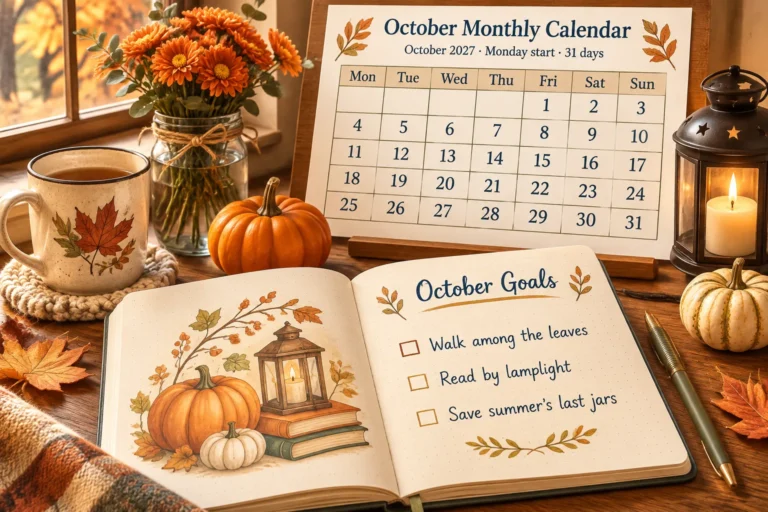
Set it up: Use a seven-column Monday-to-Sunday grid. For August 2027, leave Monday through Saturday empty in the first row and place 1 under Sunday. In the final row, place 30 under Monday and 31 under Tuesday, leaving Wednesday through Sunday empty.
Practical tip: Use a small color key for different types of events, such as personal plans, appointments, and reminders. Keep the key simple so the calendar remains readable.
4. August Weekly Spread
What it is: A weekly layout that gives you space to organize everyday tasks, appointments, and small priorities. Unlike the dated monthly calendar, a weekly spread can be reused whenever you need another planning week.
Set it up: Divide your page into seven sections, one for each day from Monday through Sunday. Add a separate notes box for reminders, ideas, or tasks that don’t belong to a particular day.
Practical tip: Don’t fill every section with tasks. Leave a little writing space for plans that change during the week. An undated layout is especially useful if you want to start using it at any point in August.

5. August Brain Dump
What it is: A space to put everything that’s occupying your attention onto paper. It can include unfinished tasks, ideas, reminders, questions, and things you don’t want to forget.
Set it up: Give the page a clear heading and use an open writing area or a collection of loose boxes. You could divide it into “To Do,” “On My Mind,” and “Later” sections.
Practical tip: Write first and organize afterward. Once everything is out of your head, circle the items that need attention during August. Move only those tasks into your monthly or weekly planning pages.
Track Your August
Trackers can help you notice patterns without turning your notebook into another source of pressure. Choose a few things that are genuinely useful to record and keep the layouts easy to update.
6. August Habit Tracker
What it is: A monthly grid for recording small habits or routines across all 31 days of August. It provides a visual overview of which activities you remembered to do.
Set it up: Write your chosen habits in a wide column on the left and number the daily columns from 1 to 31. Add a small mark whenever you complete a habit. Possible entries include reading, stretching, journaling, watering plants, or taking a short walk.
Practical tip: Start with three to five habits rather than tracking everything. An empty square is simply information, not a reason to feel behind. You can also change your selected habits next month.
7. August Mood Tracker
What it is: A visual record of how you feel throughout the month. It gives you a creative way to check in with yourself and notice how your days have been.
Set it up: Draw 31 small shapes, such as flowers, leaves, circles, or sunflower petals. Assign a different color to a few broad mood descriptions, then color one shape each day.
Practical tip: Choose colors that are easy to distinguish and keep your mood categories flexible. You don’t need a complicated system. If you feel several emotions in one day, choose the one you most want to remember or add a small note.
8. August Sleep Tracker
What it is: A simple page for recording your sleep schedule and how rested you feel. It can help you notice your own routines over the course of August.
Set it up: Create 31 rows with columns for bedtime, wake-up time, approximate hours slept, and an optional morning note. If you prefer something more visual, use a small bar or symbol for each night’s sleep.
Practical tip: Keep the notes neutral. You might notice that your schedule changes on weekends or during busy days. This is a personal noticing tool, not medical advice or a way to diagnose sleep problems.
9. August Gratitude Log
What it is: A daily record of small things you appreciate. It encourages you to notice ordinary moments that might otherwise pass without much attention.
Set it up: Draw 31 numbered lines or small boxes, one for each day. Leave enough room for a short sentence or phrase. You could decorate the margins with tiny flowers, sunshine, or garden leaves.
Practical tip: Your entries don’t have to be extraordinary. A good breakfast, a kind message, a quiet afternoon, or a few minutes outdoors can be enough. If you miss a day, simply continue with the next available space.
10. August Reading Log
What it is: A page for keeping track of the books you read or spend time with during August. It can also help you remember titles you want to revisit later.
Set it up: Create columns for book title, author, start date, finish date, and a short rating or note. Alternatively, draw small book spines and write each title inside one.
Practical tip: Leave a little room for a favorite quote, memorable character, or one-sentence review. The purpose isn’t to reach a particular number of books. It’s to keep a record of what you enjoyed reading.
Late Summer in August
August is a good time to bring seasonal details into your journal. These pages combine creative expression with practical activities, giving you space to enjoy the remaining summer days and prepare for the transition ahead.
11. August Doodle Page
What it is: A dedicated space for practicing simple drawings and collecting decorative ideas for the rest of your notebook.
Set it up: Divide a page into small boxes and fill them with late-summer doodles: sunflowers, lemons, watering cans, garden gloves, butterflies, leaves, iced drinks, and little sunshine icons.
Practical tip: Keep your doodles simple enough to repeat. A small collection of easy illustrations can decorate your weekly spreads without requiring a new design every time.
12. Garden Harvest Page
What it is: A seasonal page for recording vegetables, fruits, herbs, and flowers that you grow, collect, or enjoy during late summer.
Set it up: Draw a few produce baskets or use separate sections for vegetables, fruits, herbs, and garden notes. Record what you harvested, what is growing, or which seasonal ingredients you would like to try.
Practical tip: You don’t need a garden to use this spread. It can also become a seasonal food journal where you record farmers’ market finds, favorite produce, and simple cooking ideas.
13. Back-to-School Prep Page
What it is: A planning page for organizing the small tasks that come with preparing for a new school term. It can be useful for students, parents, or anyone returning to a learning routine.
Set it up: Divide the page into sections such as supplies, important dates, things to organize, and tasks to complete before school begins. Add checkboxes beside individual items so you can mark them as you go.
Practical tip: Separate essential tasks from optional purchases or activities. This helps you focus on what actually needs to be ready rather than creating an unnecessarily long preparation list.
14. August Bucket List
What it is: A collection of small activities you would like to enjoy before summer ends. It makes room for experiences rather than filling the month entirely with responsibilities.
Set it up: Draw a collection of 10–15 small boxes or illustrated icons. Add ideas such as watching a sunset, visiting a garden, making a seasonal recipe, reading outdoors, or taking a day trip.
Practical tip: Include a mixture of free, simple activities and slightly bigger plans. Leave room for spontaneous ideas, too. Your bucket list should feel inviting, not like another deadline.
15. Late-Summer Memories Page
What it is: A memory-keeping spread for collecting little moments from the final weeks of summer. It can hold photographs, handwritten notes, tickets, or small pieces of paper.
Set it up: Create a loose scrapbook layout with a few photo spaces, caption boxes, and room for small keepsakes. Add the date and a short description beside each memory.
Practical tip: Don’t wait until the end of the month to fill this page. Add something whenever a moment feels worth remembering. A handwritten note about an ordinary afternoon can become just as meaningful as a special outing.
Plan and Reflect
The final five spreads help you look ahead, organize everyday responsibilities, and reflect on what you want to carry into September. They can be used alongside your weekly pages or independently.
16. End-of-Summer Goals Check-In
What it is: A gentle review of the intentions you set for summer. It helps you see what has changed, what you enjoyed, and which goals still matter to you.
Set it up: Divide the page into three sections: “What I wanted to do,” “What I actually did,” and “What still matters.” Add a few lines beneath each heading for short reflections.
Practical tip: Avoid treating unfinished goals as failures. Some plans change, and others become less important with time. Use this page to decide which intentions you want to continue into September.
17. August Meal Planner
What it is: A simple place to plan meals and keep track of food ideas throughout the month. It can make everyday meal decisions easier to organize.
Set it up: Create a weekly meal grid with spaces for breakfast, lunch, and dinner, or use a simpler seven-day dinner plan. Add a small area for grocery reminders and recipes you want to try.
Practical tip: Leave a few flexible spaces for leftovers, eating out, or changing plans. You don’t have to decide every meal in advance for the page to be useful.
18. Late-Summer Day Trip Planner
What it is: A planning page for a short outing before summer ends. It can help you organize the practical details while leaving room to enjoy the experience.
Set it up: Include sections for destination, date, travel details, things to bring, estimated costs, and places you would like to visit. You could also add a small box for a map or a sketch of the destination.
Practical tip: Keep the list proportional to the trip. A short local outing may need only a destination, a few essentials, and a time to leave. Save the page afterward as part of your summer memories.
19. August Money Tracker
What it is: A personal organization page for keeping an overview of spending, savings, and planned expenses during August.
Set it up: Add columns for date, description, category, and amount. You can also include separate spaces for planned expenses, savings notes, and a brief end-of-month review.
Practical tip: Keep the categories simple and record information consistently. This spread is intended for personal organization, not financial advice. Use it as a convenient place to keep your own notes rather than as a substitute for professional financial guidance.
20. End-of-August Reflection
What it is: A closing page for looking back on the month before beginning a new September setup. It gives you a place to collect lessons, memories, and things you want to carry forward.
Set it up: Divide the page into prompts such as “My favorite August moment,” “Something I learned,” “A small thing I’m proud of,” and “What I’d like more of next month.” Leave a little space for a photograph or a final note.
Practical tip: Keep your answers honest and short if that’s what feels natural. You don’t need a perfect summary of the month. A few sentences can be enough to remember what August meant to you.
How to Use the Free August Bullet Journal Setup Pack
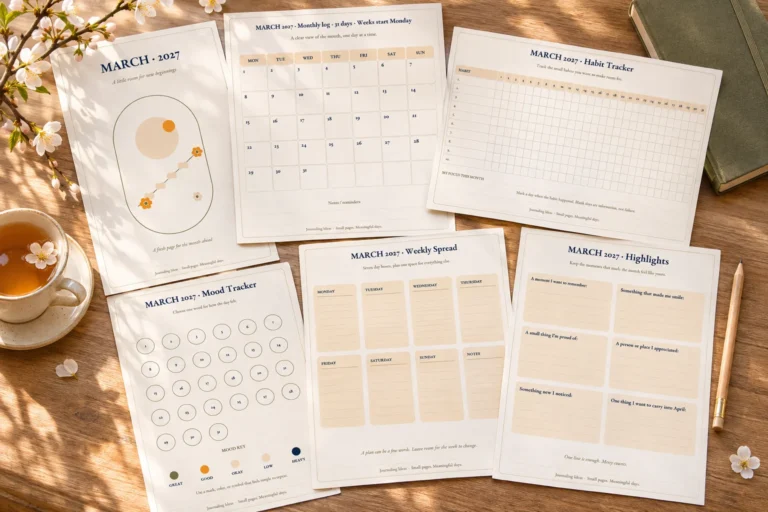
You don’t have to draw every page from scratch. The free August Bullet Journal Setup Pack includes six printable sheets to help you get started with the essential layouts.
The pack is available in A4 and US Letter sizes through The Small Pages Library. It is free, with no email signup or password required.
Here is what the six sheets include:
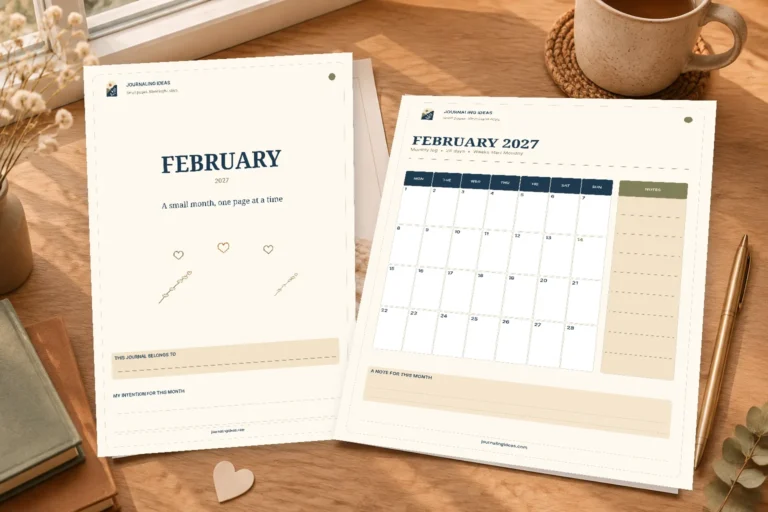
- August Cover Page: An August 2027 opening page with a small August mini-calendar, giving your notebook a seasonal starting point.
- August Monthly Calendar: A dated August 2027 calendar with a Monday-start layout, the correct weekday positions, and a dedicated notes and reminders area.
- August Weekly Spread: An undated Monday-to-Sunday weekly layout with a separate notes box. Because it is undated, you can use it for any week.
- August Habit Tracker: A monthly habit-tracking layout with numbered spaces for all 31 days.
- August Mood Tracker: A 31-day mood-tracking page for recording your daily check-ins.
- End-of-August Reflection: A dedicated page for reviewing the month and collecting your thoughts before September.

The dated calendar is specifically for August 2027. The weekly spread is undated, so it doesn’t depend on a particular calendar year.
You can print all six sheets or choose only the pages you need. For example, if you already have a monthly calendar in your notebook, start with the habit tracker and reflection page instead.
How to Print and Use the August Pages
The August setup pack includes two paper sizes: A4 and US Letter. Choose the version that matches the paper in your printer.
A few simple printing tips can help:
- Choose the matching file: Use the A4 PDF for A4 paper or the US Letter PDF for 8.5 × 11-inch paper.
- Check the orientation: These printable pages are designed for portrait printing.
- Print at the correct scale: Select “Actual Size” or “100%” in your printer settings to preserve the page dimensions.
- Check the margins: If your printer clips an edge, try “Fit to printable area” and check the result before printing the remaining sheets.
- Test one page first: Print a single sheet to make sure the text and layout look clear on your paper.
- Choose your preferred finish: You can use color or grayscale printing, depending on your preference and printer.
Ordinary printer paper works for most layouts. If you plan to add watercolor, markers, or heavier decoration, choose a paper weight that suits your materials and printer.
Once printed, you can keep the pages in a binder, add them to a notebook, or use them as loose planning sheets. You can also copy a layout by hand if you prefer working directly in your bullet journal.
August Bullet Journal Ideas: Frequently Asked Questions
1. When should I set up my August bullet journal?
The best time is toward the end of July or at the beginning of August. Set up the dated monthly calendar first, then add weekly spreads as you need them. You do not need to complete every page before August starts.
2. What spreads does an August bullet journal need?
A simple setup can begin with a cover page, monthly calendar, monthly log, and one weekly spread. Add trackers or reflection pages only if you expect to use them. Two or three practical pages can be enough for a useful month.
3. What are good August bullet journal themes?
Late-summer details work well: sunflowers, golden light, garden harvests, warm colors, and gentle back-to-school notes. Choose one or two motifs and repeat them across a few pages rather than decorating every spread differently.
4. Is the August Bullet Journal Setup Pack free?
Yes. The six-sheet August 2027 Setup Pack is free in The Small Pages Library. There is no email signup or password. You can download just the sheets you want.
5. What size are the printables?
Each sheet is available as a single-page PDF in A4 and US Letter portrait formats. The August 2027 calendar is dated and Monday-start; the weekly spread is undated, so it can be reused for any week.
6. I can’t draw — can I still use these ideas?
Absolutely. You can use the printable pages, or build simple layouts with boxes, lines, and short labels. Stickers, washi tape, or a ruler can add detail if you enjoy them, but decoration is optional.
A Small Start for August
Your August bullet journal does not need all 20 spreads to be useful. Pick one page that will help you see the month, then add another only if you need it. Keep the layouts practical, leave room for real life, and let your notebook change as the month unfolds.
The free six-sheet setup pack can make the first pages easier, but you can start with a blank notebook and a pen, too. One small page is a good beginning.
Small pages. Meaningful days.
Journaling Ideas Editorial Team
As August winds down, you can keep the same gentle planning rhythm with these september bullet journal ideas. The guide shares 20 early-fall spreads, from calendars and trackers to apple-inspired pages and reflection. It also includes a free six-sheet September setup pack in A4 and US Letter, with no signup required.

3 Comments