
February Bullet Journal Ideas: 20 Simple Spreads for a Short Month
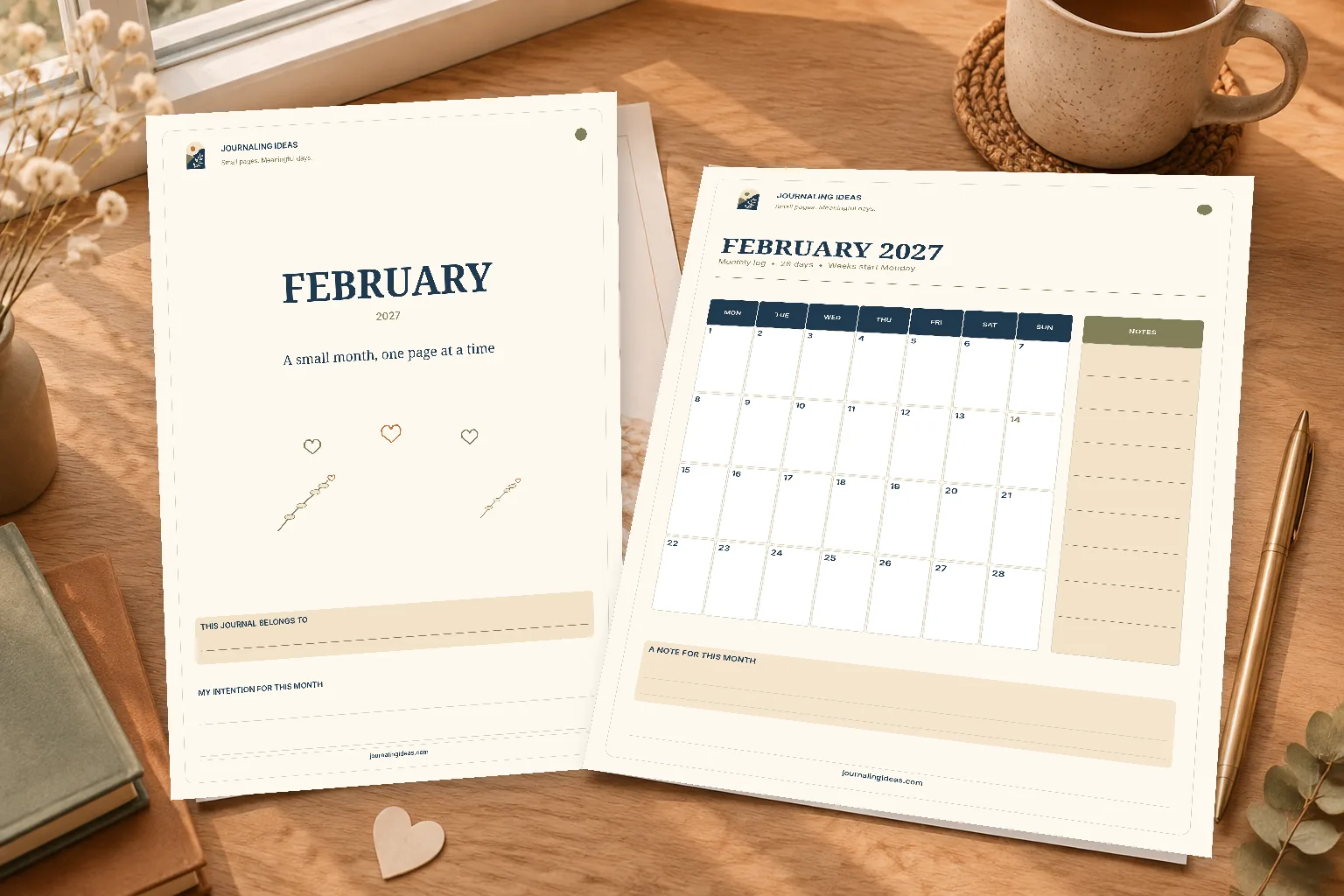
February is a good month to keep your bullet journal simple. This guide gives you 20 easy February bullet journal spread ideas, from monthly calendars and habit trackers to weekly layouts and reflection pages. You’ll also find a free six-page February setup pack with ready-to-print pages, so you can spend less time drawing layouts and more time using them.
February Is a Short Month — Set Up Lightly
February 2027 has 28 days, so there’s no need to create an elaborate monthly setup to stay organized. A few useful pages can give you enough space to plan your dates, track small habits, and record the moments you want to remember.
February 1, 2027, falls on a Monday, making it easy to begin with a clean Monday-to-Sunday monthly calendar. Valentine’s Day falls on Sunday, February 14, giving you a natural opportunity to add a small kindness-themed page or a reminder to appreciate the people who matter to you.
Instead of filling your journal with too many layouts, choose a few pages that support your everyday routine. A simple cover, monthly calendar, one tracker, and weekly spread can be enough.
Remember, your bullet journal doesn’t need to look perfect to be useful. Keep your setup light, leave room for changes, and choose the pages you’ll actually enjoy using.
February Is Short — Plan Like It
February 2027 is the tidiest month of the year in a Monday-start journal: it begins on Monday, February 1 and ends on Sunday, February 28 — exactly four complete weeks, with no stray days spilling into a fifth row. That neat grid makes February the easiest month to keep up with, and its short length is an advantage if January ran away from you. Plan smaller: one tracker, one weekly layout you genuinely like, and goals that fit 28 days rather than 31. For writing prompts matched to the month, see our February journal prompts.
Two dates shape the month. Valentine’s Day falls on Sunday, February 14, which suits a slower, at-home kind of page — a gratitude list, a self-care spread, or a note to future you. Presidents’ Day follows on Monday, February 15 in the United States, giving many people a long weekend right at the month’s midpoint. Use it the way this setup uses every pause: briefly, kindly, and only to adjust the plan — not to restart it.
20 February Bullet Journal Ideas
Here are 20 simple February bullet journal spreads, divided into four groups. Each idea can be drawn in a notebook or adapted to your existing journal.

Cover & Monthly Pages
Start with a few simple pages to give February a clear beginning and organize the important dates.
1. Simple February Cover Page — Create a clean February title page with small hearts, delicate branches, or a late-winter theme, leaving space for your name or a one-line monthly intention.
2. One-Page Monthly Calendar — Draw a simple seven-column calendar with enough writing space for appointments, plans, birthdays, and important dates throughout February.
3. Vertical Monthly Log — Write the dates down the left side of your page and leave a few lines beside each one for appointments, reminders, deadlines, and daily plans.
4. February Intentions Page — Choose three or four gentle intentions for the month, such as making time to read, journaling regularly, or creating a calmer evening routine.
5. Dates-to-Remember Strip — Create a narrow list of important February dates, including Valentine’s Day on Sunday, February 14, appointments, birthdays, and personal events.
Trackers
Trackers help you notice everyday patterns and give you a simple place to record your progress.
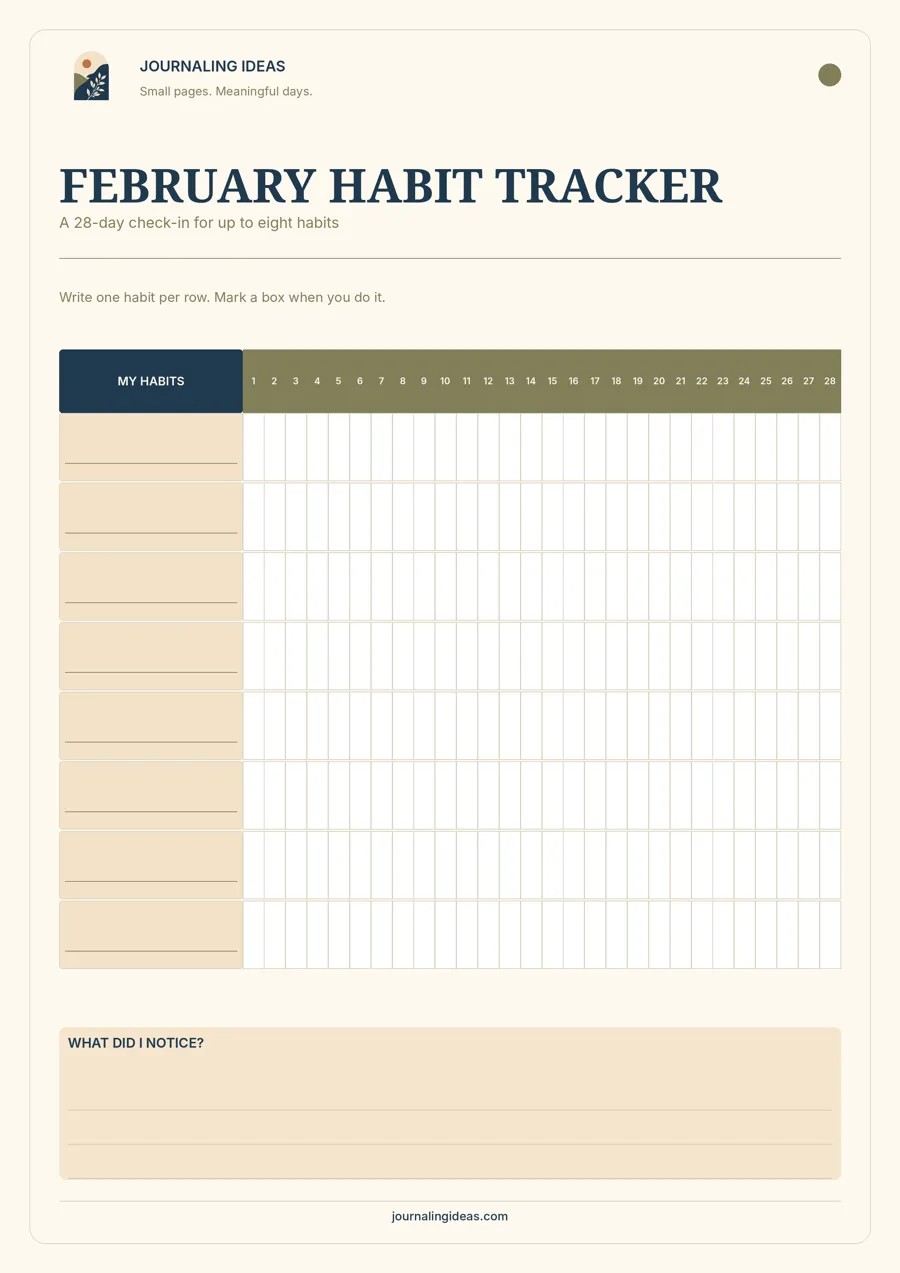
6. 28-Day Habit Tracker — Draw a grid with 28 numbered columns and space for up to eight habits, such as reading, stretching, drinking water, or journaling.
7. February Mood Tracker — Draw 28 small hearts or leaves, one for each day, and use different colors or simple marks to represent how you feel.
8. Sleep Tracker — Create a simple daily table to record your bedtime, wake-up time, or approximate hours of sleep throughout February.
9. Gratitude Line-a-Day Page — Give each day one short writing line where you can record a person, moment, experience, or ordinary thing you appreciated.
10. February Spending Snapshot — Make a small daily spending log with columns for the date, purchase, and amount, plus a notes area for expenses you want to review.
Weekly & Daily
These layouts turn your monthly overview into manageable everyday plans.
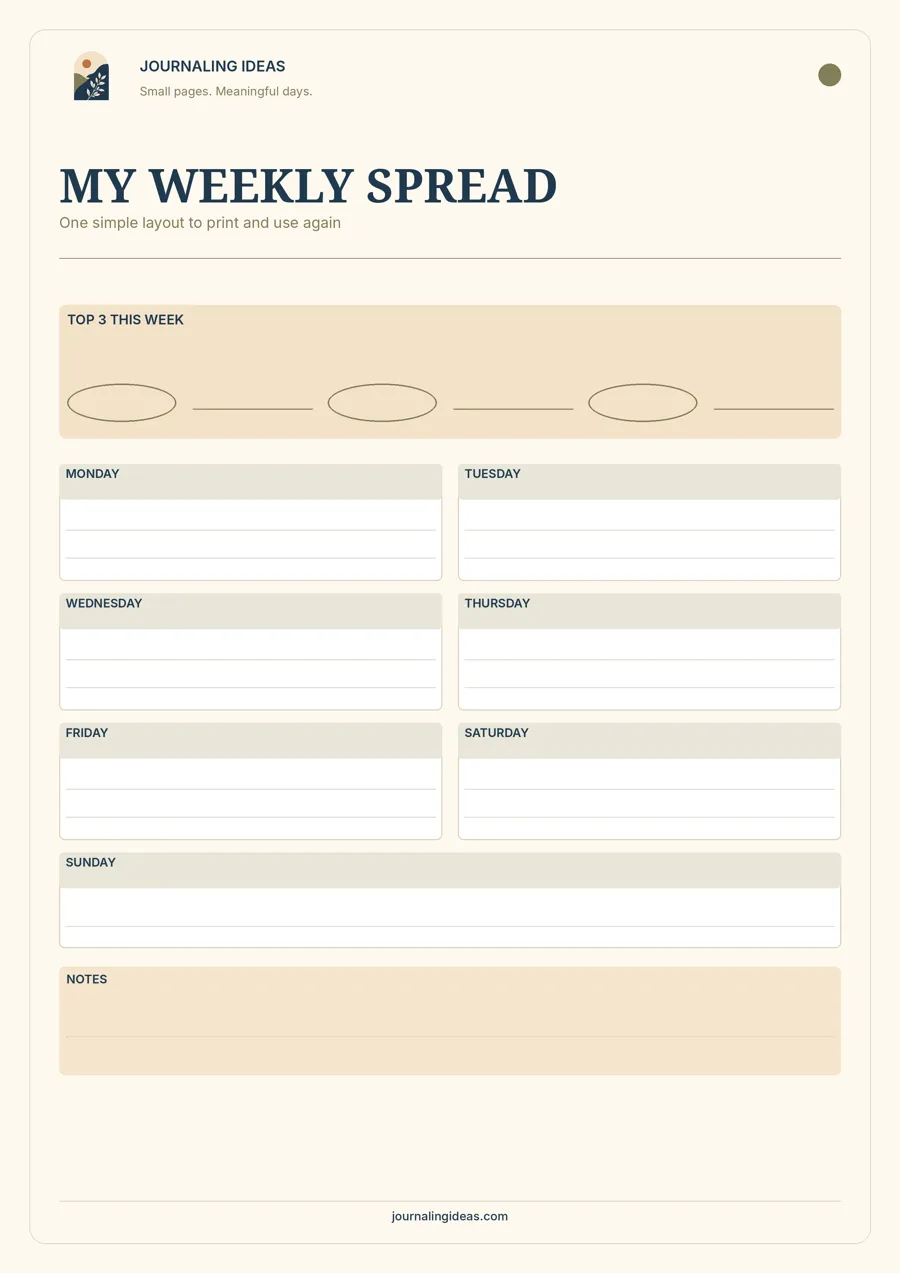
11. One-Page Weekly Spread — Divide one page into seven sections, one for each day, and add a small space for your main priorities and weekly notes.
12. Rolling Weekly List — Create one running task list for the week instead of assigning everything to a specific day, moving unfinished tasks forward when needed.
13. Simple Daily Log — Write the date followed by a short list of appointments, tasks, reminders, and notes without creating complicated boxes or decorations.
14. Top-3 Priorities Strip — Add three numbered spaces to your daily or weekly page and write down the three things that matter most.
15. Sunday Reset Checklist Page — Create a short checklist for reviewing the week, checking upcoming dates, choosing priorities, and preparing your journal for the next few days.
February Extras
Add a little personality to your February journal with pages for memories, creativity, and personal reflection.
16. Valentine’s Page — Create a page for kind notes to yourself or others, with space for appreciation, favorite memories, and small reminders of what matters to you.
17. Small Wins Page — Give February its own small-wins list where you can record little achievements, completed tasks, brave decisions, and moments when you made time for yourself.
18. Books-and-Shows February List — Create two simple lists for books you’d like to read and shows or films you’d like to watch, adding a checkbox beside each title.
19. February Brain-Dump Page — Use an open page to collect unfinished thoughts, ideas, reminders, and tasks without worrying about organizing everything immediately.
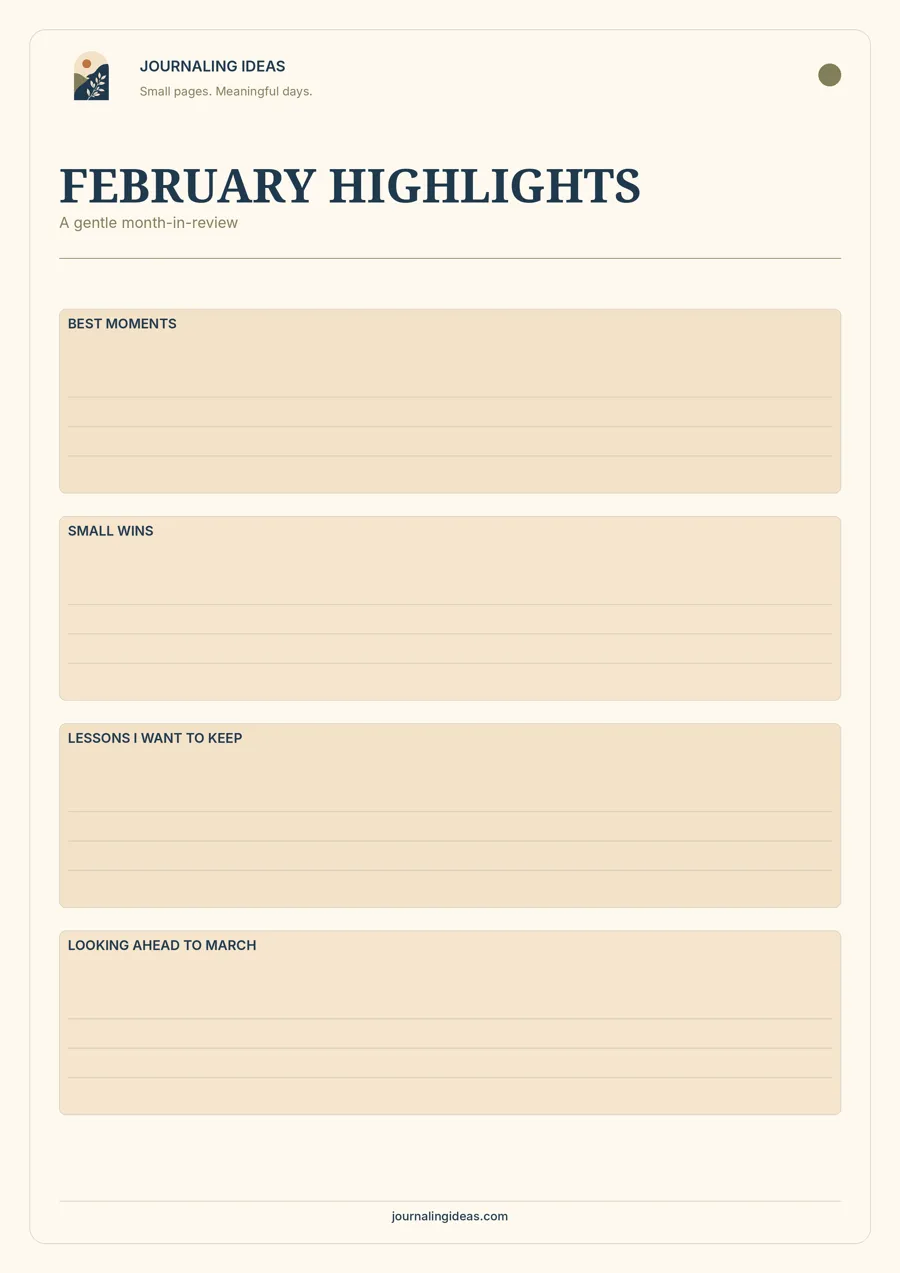
20. February Highlights / Month-in-Review Page — At the end of the month, record your best moments, small wins, lessons, and anything you’d like to carry forward into March.
A Simple February Setup Order
You don’t need all 20 spreads to create a useful February bullet journal. If you’re a beginner, follow these five simple steps:
- Cover: Start with a February title page, adding a small heart, late-winter detail, or one-line intention.
- Monthly: Create one monthly calendar or vertical log to organize appointments, important dates, and plans.
- One Tracker: Choose one habit tracker, mood tracker, or another simple tracking page you’ll actually use.
- Weekly: Add a reusable weekly spread with space for seven days, your top three priorities, and notes.
- One Extra: Finish with one personal page, such as a Valentine’s page, brain dump, or February highlights.
That’s a complete starting point for the month. You can always add more pages later if you find yourself needing them.
A gentle reminder from the Editorial Team: Your bullet journal is there to make everyday life a little easier, not to give you another reason to feel behind. Start small, use what works, and let the rest be optional.
How to Use the Free February Bullet Journal Setup Pack
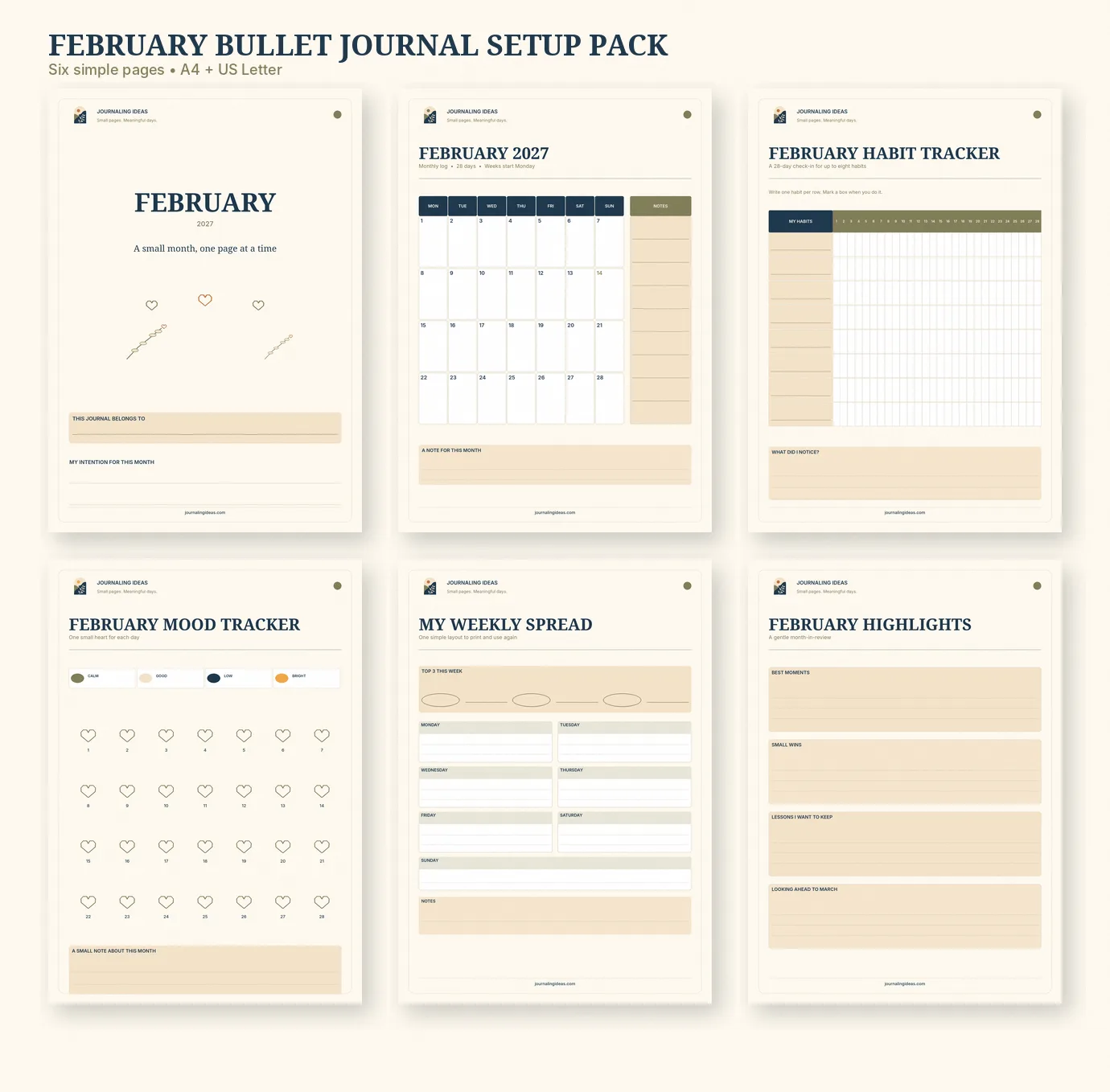
If drawing calendars and trackers takes more time than you want to spend, the February Bullet Journal Setup Pack gives you six ready-to-print pages.
The pack includes:
February Cover Page: A simple heart and late-winter design, with space for your name and a monthly intention.
February Monthly Log: A 28-day calendar with Monday as the first day of the week and a small notes column.
February Habit Tracker: A 28-day grid with room to write and track up to eight habits.
February Mood Tracker: 28 small hearts to color or mark, with a key for calm, good, low, and bright moods.
Weekly Spread: A reusable one-week layout with seven day sections, three priorities, and notes. Print it four times if you want one for each week.
February Highlights: A reflection page for your best moments, small wins, lessons, and thoughts about March.
You can use the pages together as one small monthly system or select only the sheets you need.



Download the free February Bullet Journal Setup Pack:
Sheet 1 — February Cover Page (A4 PDF)
Sheet 1 — February Cover Page (US Letter PDF)
Sheet 2 — February Monthly Log (A4 PDF)
Sheet 2 — February Monthly Log (US Letter PDF)
Sheet 3 — February Habit Tracker (A4 PDF)
Sheet 3 — February Habit Tracker (US Letter PDF)
Sheet 4 — February Mood Tracker (A4 PDF)
Sheet 4 — February Mood Tracker (US Letter PDF)
Sheet 5 — Weekly Spread (A4 PDF)
Sheet 5 — Weekly Spread (US Letter PDF)
Sheet 6 — February Highlights (A4 PDF)
Sheet 6 — February Highlights (US Letter PDF)
Where can you get the free printable pack?
The complete February Bullet Journal Setup Pack is available free through The Small Pages Library, with no email signup or password required. Choose the A4 or US Letter version and print the sheets you want to use.
How to Print Your February Bullet Journal Pages
The pack comes in two standard paper sizes:
A4: A practical choice for many international printers.
US Letter: The standard choice for many US home printers.
For the intended page dimensions, use these print settings:
- Open the PDF for your preferred paper size.
- Select the correct paper size in your printer settings.
- Choose 100% or Actual Size.
- Check that the page orientation is portrait.
- Print one test sheet before printing the complete pack.
Avoid selecting Fit to Page if you want to preserve the original dimensions. You can also print only the pages you plan to use rather than the entire pack.

How to Make Your February Bullet Journal Work for You
A bullet journal should support your everyday life, not create more work. These small adjustments can make your setup easier to maintain.
Start with fewer pages. A cover, monthly log, one tracker, and weekly spread are enough to get started.
Choose trackers you will actually use. If you don’t want to track sleep, don’t add a sleep tracker just because it looks attractive.
Leave room for changes. Your priorities can shift during the month. Keep some blank space for unexpected plans and notes.
Don’t worry about decoration. A title, a few lines, and a simple color accent are enough. Your pages don’t need to look perfect.
Review instead of restarting. If you miss a day, continue with the next one. You don’t need to fill every empty box.
If you’re still learning the basics, our guide to bullet journal for beginners explains how to start with simple page layouts and everyday bullet journal symbols. For another example of a seasonal monthly setup, explore december bullet journal ideas.
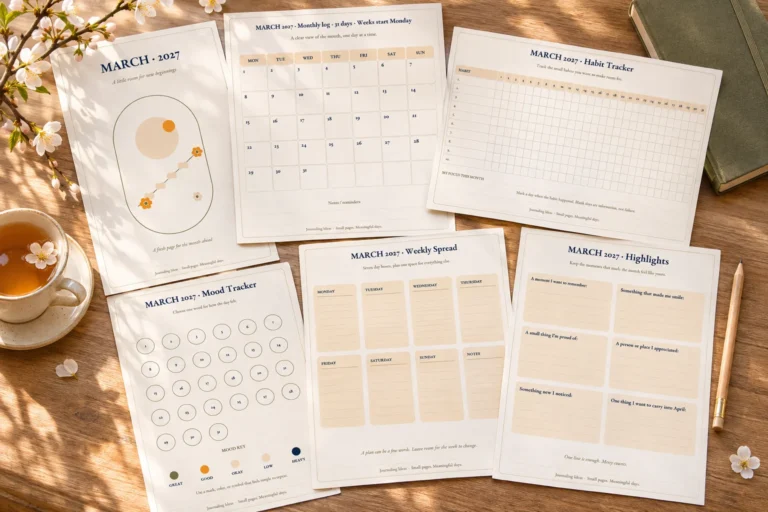
Ready to move from winter pages into a lighter spring setup? Explore our march bullet journal ideas for 20 simple spreads, including a spring intentions page, monthly trackers, a weekly spread, and an end-of-month reflection. There is also a free six-sheet March setup pack in A4 and US Letter, with no signup required.
Frequently Asked Questions
When should I set up my February bullet journal?
You can prepare your pages during the last few days of January or on February 1. If you prefer to plan ahead, set up the cover and monthly log early and add your trackers when February begins.
What if I start my February bullet journal in the middle of the month?
Start with the current date. You can leave earlier calendar boxes empty and use the remaining days. A short month is a good time to begin because the setup stays small.
How many spreads do I actually need for February?
You can start with three to five useful pages: a cover, monthly calendar, one tracker, a weekly spread, and one extra. Add more only if you find a clear use for them.
Do the printable pages fit a normal bullet journal?
The supplied pages are full-size A4 and US Letter printables, not notebook-sized inserts. You can use them as loose reference pages, print the weekly spread at a reduced size, or copy the layout by hand into your bullet journal.
Can I use this February setup pack in any year?
The monthly calendar is specifically designed for February 2027. The weekly spread is undated and reusable, while the cover and highlights page can be adapted for another February. The habit and mood trackers have 28 spaces, so add a 29th if you use them in a leap-year February.
Should I choose A4 or US Letter?
Choose the paper size that matches your printer. A4 is commonly used internationally, while US Letter is standard in the United States. Both versions contain the same six pages.
A Small Setup Is Still a Good Setup
Your February bullet journal doesn’t need 20 elaborate spreads to be useful. Choose a few layouts that fit your month, use the six-page printable pack as a starting point, then make changes as the month unfolds.
Small pages. Meaningful days.
— Journaling Ideas Editorial Team



4 Comments