
September Bullet Journal Ideas: 20 Simple Spreads for a Fresh Fall Start
September bullet journal ideas can help you ease into early fall with pages for routines, plans, habits, and small seasonal moments. This guide shares 20 practical spreads, from a simple monthly calendar to an apple-themed page, plus a free six-sheet setup pack in A4 and US Letter. There is no signup required. Choose one page and begin there.
A September setup can be simple. Keep the layout minimal, add warm colors, and make room for routines that change with the season. Treat these ideas as a menu, not a checklist.
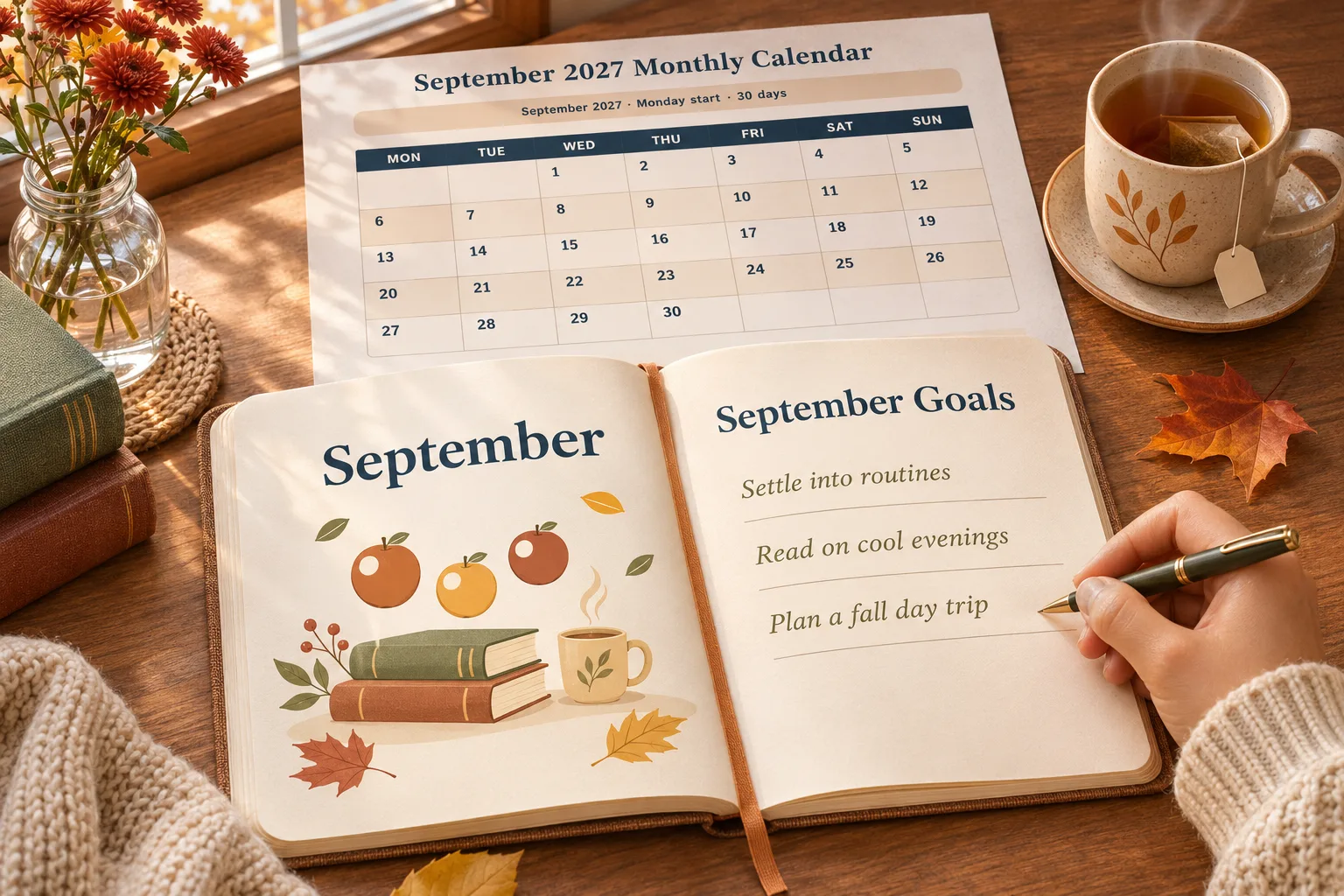
September at a Glance
September 2027 has 30 days. The month begins on Wednesday, September 1, and ends on Thursday, September 30. For a Monday-start calendar, the first week has Monday and Tuesday empty, followed by September 1 on Wednesday; the final week ends with September 30 on Thursday, leaving Friday through Sunday empty.
In the United States, Labor Day falls on Monday, September 6, 2027. If you observe the holiday, leave room for travel, a slower day, or plans with family and friends. September also brings an early-fall shift: back-to-school routines, apples and harvest details, and colors that move from warm gold toward russet. You can reflect that change with a small seasonal accent instead of redesigning every page.
How to Choose Your September Bullet Journal Pages
Start with the pages that solve a real need. If you want to see appointments and deadlines together, begin with the monthly log or calendar. If you are trying to make a new routine feel manageable, choose a habit tracker or weekly spread. If you want to remember the season, make space for a bucket list, a doodle page, or a few lines about a September memory.
Choose a setup you can maintain. A calendar and short weekly list may be enough; trackers should answer a question you genuinely want to notice, not become another obligation. Leave blank space for unpredictable days.
If you are new to bullet journaling, the bullet journal for beginners guide explains the basic page types and how to start with a simple system. You can also borrow a layout from your August bullet journal ideas or look back at the July bullet journal ideas if you want to keep a familiar structure while changing the theme.
Start Your September
These first five pages give your month a home. They establish the look of your journal, hold the dates and plans you need to see, and provide a place to collect thoughts before they become tasks. Keep the design consistent across the group: one headline style, one or two accent colors, and enough writing room.
1. September Cover Page
Open the month with “September” as the main feature. Add a few apples, falling leaves, books, or harvest flowers, using warm gold, muted olive, and a little russet.
Keep the page simple: a title, thin border, and one small drawing or sticker are enough. Leave space for a word you want to carry into the month, such as steady or rested.
2. September Monthly Log
Use a monthly log for appointments, deadlines, and events. Divide the page into two columns: dates and weekdays on the left, with a wider space for each reminder on the right.
Add three monthly priorities at the top, then fill dates as plans become definite. Keep entries brief so the page stays a quick reference rather than a detailed diary.
3. September Calendar at a Glance
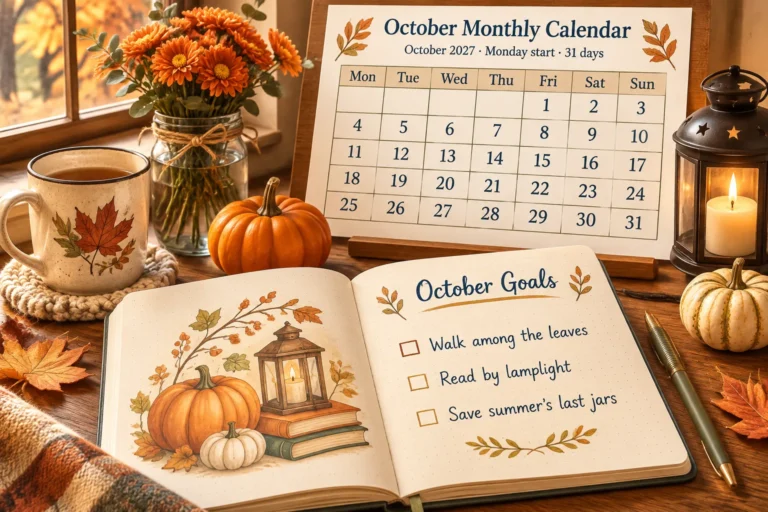
A Monday-start grid lets you see the whole month at once. September 2027 begins on Wednesday, so leave Monday and Tuesday empty; September 30 belongs under Thursday in the final row.
Add a notes block for birthdays, school dates, and plans. Mark US Labor Day on Monday, September 6, 2027. Keep long details outside the date boxes so the calendar remains easy to scan.
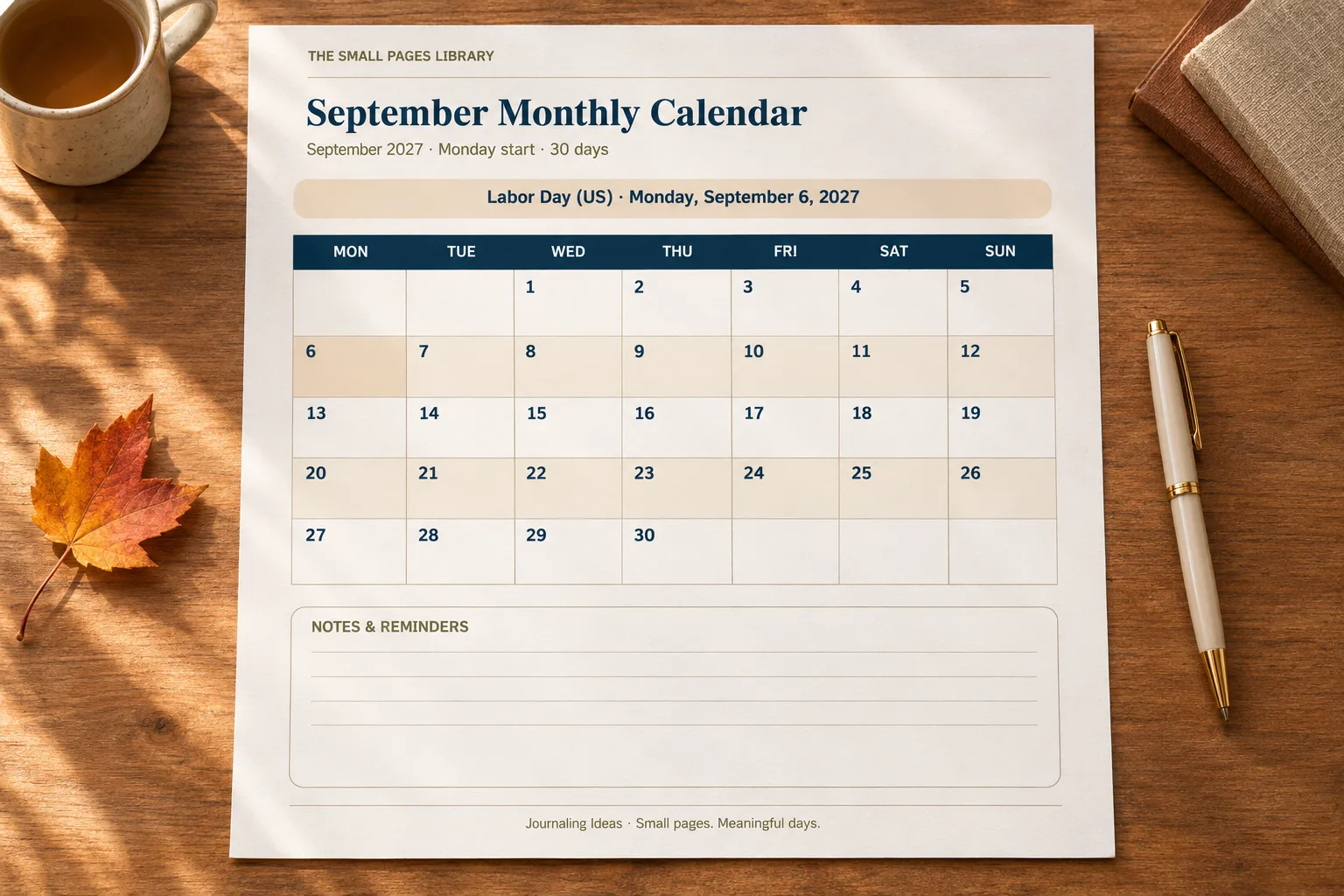
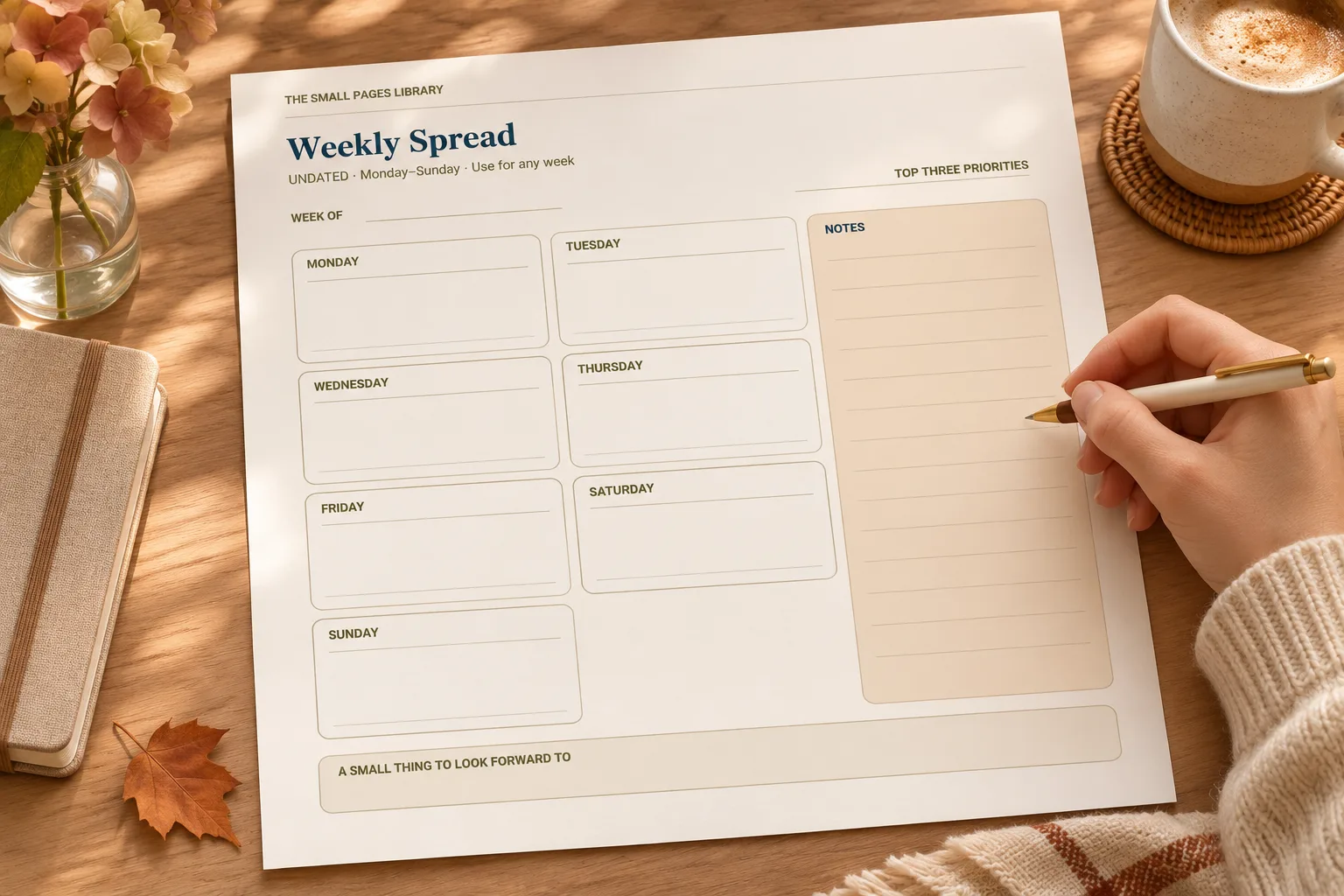
4. September Weekly Spread
Divide a two-page layout into seven sections labeled Monday through Sunday. Add a notes box for tasks that do not belong to one particular day.
Keep this spread undated so you can reuse it for any week. Add appointments, a few important tasks, and three weekly priorities at most.
5. September Brain Dump
Make three areas labeled “To do,” “On my mind,” and “Can wait.” Write loose thoughts under each heading without sorting or editing as you go.
When you finish, move only the actions that matter this month into your monthly log or weekly spread. Not every thought needs to become a task today.
Track Your September
Trackers can help you notice patterns, but they are optional tools. Choose a small number that match what you want to pay attention to, and make the marks easy to complete. If a tracker stops being useful, simplify it or leave it out.
6. September Habit Tracker
Write your chosen habits down the left and the dates 1 through 30 across the top. Leave enough width for habit names, then mark each day with a dot, check, or small square.
Choose specific, realistic habits such as reading for ten minutes or preparing tomorrow’s bag. Blank spaces are fine; the page helps you notice patterns, not grade your consistency.
7. September Mood Tracker
Choose a few mood words and assign each one a simple color or symbol. Use 30 leaves, apples, or circles, one for each day, and add a small key.
Keep categories broad and nonjudgmental. This is a personal reflection aid, not a diagnosis; use a neutral mark or leave a day blank if no label feels right.
8. September Sleep Tracker
Create a 30-day table with spaces for the date, approximate bedtime, wake-up time, and an optional note about how rested you felt. Keep recording quick.
Use it to notice your routines, not to interpret or diagnose sleep concerns. It is a noticing tool, not medical advice; speak with a qualified health professional if sleep affects your health or daily life.
9. September Gratitude Log
Draw 30 small boxes, leaves, or apple shapes and write one thing you appreciated in each. A short phrase about a kind message, meal, or quiet moment is enough.
If daily entries feel repetitive, vary the question: what made you smile, what helped, or what ordinary thing do you want to remember? Do not force a positive answer on a difficult day.
10. September Reading Log
Create columns for book title, author, start date, finish date, and a quick note. Add a simple status such as reading, paused, or finished if you have several books underway.
Use the notes column for a favorite passage or idea. A gentle intention, such as reading outside one afternoon, can make the page inviting without turning it into a race.
Into Fall
This group gives your September journal a little more personality. These pages are not essential planning tools; they are places to collect seasonal ideas, small creative moments, and memories you may want to revisit.
11. September Doodle Page
Fill a page with small early-fall drawings: apples, leaves, acorns, pencils, books, mugs, sweaters, or school supplies. Keep them separate like stickers or connect them with a loose vine.
Repeat basic shapes, trace objects, or use labels and patterns if drawing feels difficult. Leave empty spaces so you can add to the page during the month.
12. Back-to-School Routine Page
Split the page into “Before the day,” “After the day,” and “Evening,” then list a few helpful steps under each. Adapt the headings for a new work routine if school is not part of your September.
Keep the list short and flexible. Packing what you need or checking tomorrow’s schedule may be enough; routines can change as the month settles in.
13. Fall Bucket List
List small early-fall activities you would enjoy: visiting an apple orchard, walking among changing leaves, trying a new soup, browsing a library, or reading without a screen.
Include at-home and low-cost ideas too. Add checkboxes, star a favorite, and choose one to try this week rather than treating the list as a set of obligations.
14. Apple and Harvest Page
Draw a basket of apples, branches, or small fruit shapes. Use the spaces to record seasonal foods, recipes to try, or places you would like to visit.
A mini recipe collection could hold an apple snack, soup idea, or comforting meal. Use gold, olive, cream, and russet to keep the page cohesive.
15. September Memories Page
Save moments with short notes, a ticket stub, a photo, or a pressed leaf. Arrange them in a loose grid and leave a caption space beside each item.
Or use three prompts: “A moment I want to remember,” “Something that surprised me,” and “A small thing that felt good.” Add to the page gradually.
Plan and Reflect
The final group helps you look ahead while keeping everyday decisions manageable. These pages work well near the end of a setup because they connect intentions, meals, weekends, and money notes with the month you have already planned.
16. Fall Goals Check-In
Choose up to three seasonal goals and give each a small space for its next step. Consider a reading routine, more time outdoors, or calmer weekday mornings.
Add a check-in date and ask, “What is working, and what needs to change?” Revisit the page at month-end and adjust your plans for October.
17. September Meal Planner
Plan meals for a week or make a loose list of dinner ideas. A simple table can include the day, meal, and ingredients to use; add a “Use soon” area for food already at home.
Leave spaces for leftovers, easy meals, or changing plans. The page should reduce decisions on busy evenings, not become another schedule to maintain perfectly.
18. Weekend Reset Planner
Create three areas: “Need to do,” “Would be nice,” and “Time to rest.” Add appointments first, then choose a few tasks that would make the coming week easier.
Be realistic about what fits. Choose one or two reset tasks and leave open space around them; move unfinished items forward without treating them as a failure.
19. September Money Tracker
Record planned spending categories, bill due dates, or purchases you want to remember. Columns might include date, category, amount, and a short note.
This is for personal organization, not financial advice. If tracking every purchase feels stressful, use the page only for selected categories or important due dates.
20. End-of-September Reflection
Divide the page into “What I enjoyed,” “What felt difficult,” “What I learned,” and “What I want to carry into October.” A few lines under each heading are enough.
Add one photo, receipt, or note that represents the month. Reflection is not a performance review; it is a way to notice what September was like for you.
September Turns Two Corners
September is really two short months stitched together. Labor Day — Monday, September 6, 2027 in the United States — closes the first: summer hours end, school and work routines restart, and the journal’s job changes from capturing a season to running one. Plan the first week of September lightly and let the trackers restart without a backlog; a routine that resumes imperfectly beats one that waits for a perfect Monday. If you write as well as plan, our September journal prompts follow the same turn from summer to structure.
The second corner comes near the month’s end, when fall officially begins and the light changes for real. That is the right moment for the Fall Goals Check-In in this setup: not January’s ambitions restated, but a short list fitted to shorter days. September 2027 runs from Wednesday the 1st to Thursday the 30th — thirty days, two seasons, and a notebook that only has to keep up with one week at a time.
How to Use the Free September Bullet Journal Setup Pack
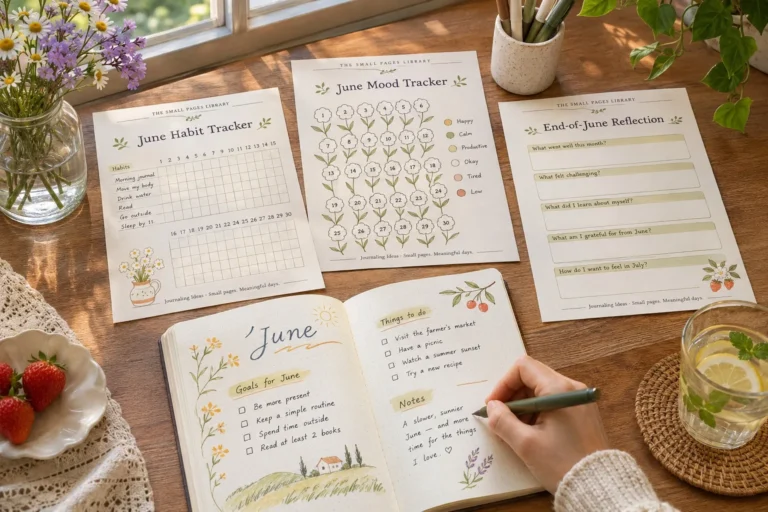
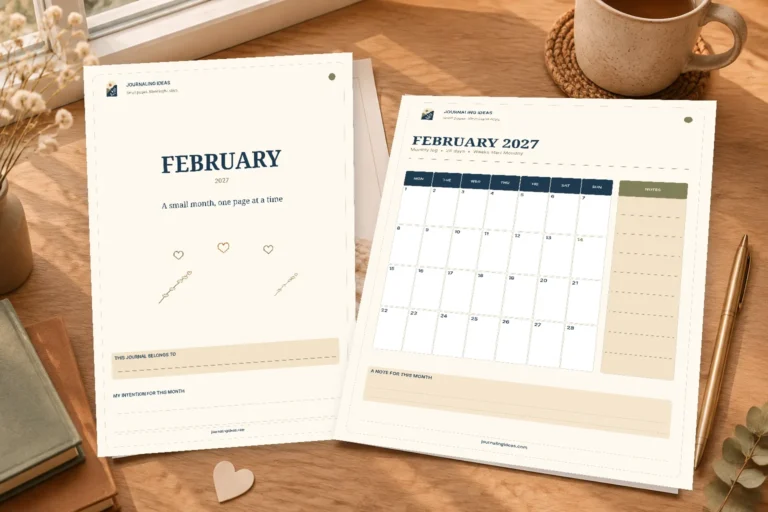
The free September Bullet Journal Setup Pack includes six printable sheets, each prepared in A4 and US Letter. The calendar is a dated September 2027 calendar with a Monday-start layout and a note for US Labor Day on Monday, September 6, 2027. The weekly spread is undated, so you can use it for any week.
- September Cover Page. Use the cover to introduce the month, with a small September 2027 mini-calendar for a quick date reference. (A4 · US Letter)
- September Monthly Calendar. Add appointments, deadlines, school dates, and important plans to the dated Monday-start calendar. (A4 · US Letter)
- September Weekly Spread. Print this undated Monday–Sunday layout when you want a fresh week, and use its notes box for tasks that do not belong to one day. (A4 · US Letter)
- September Habit Tracker. Write your chosen habits down the side and mark the 30 days as you go. (A4 · US Letter)
- September Mood Tracker. Choose a small, personal mood key and use one mark for each day. (A4 · US Letter)
- End-of-September Reflection. Use the prompts to look back on the month and decide what you want to carry into October. (A4 · US Letter)
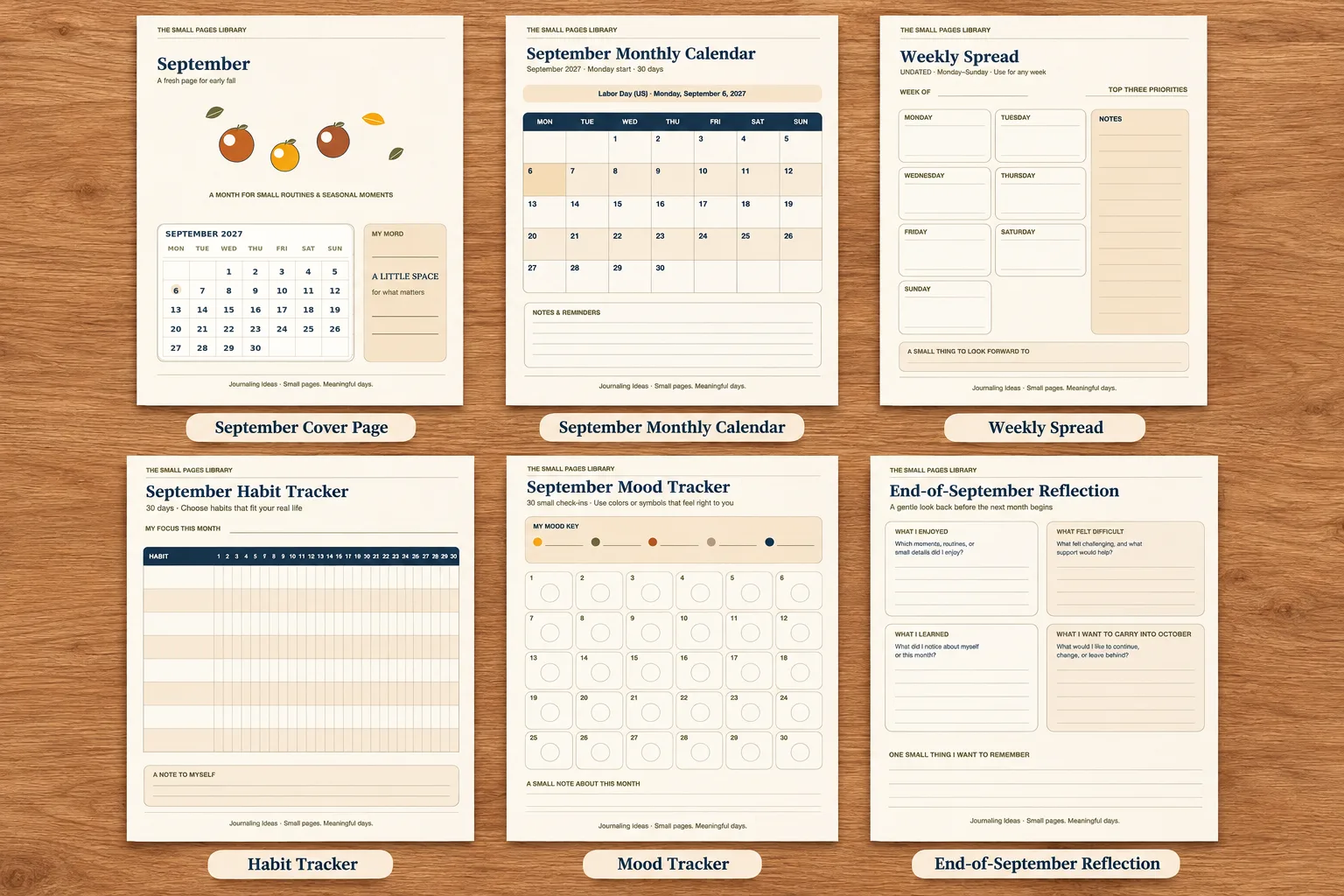
Find the six sheets in The Small Pages Library. They are free, available in A4 and US Letter, and do not require an email signup. You can print only the pages you plan to use; there is no need to print the entire pack at once.
How to Print and Use the September Pages
Choose the paper size that matches your printer and notebook. The pack includes separate A4 and US Letter files, so select the matching version before printing. For the cleanest result, use the printer’s actual-size or 100% setting when the page is designed for that paper size. Check the preview before printing a full set.
Ordinary copy paper works for everyday planning; heavier paper can suit pages you want to keep or decorate. If adding a sheet to a bound notebook, check the dimensions and trim only the outer margin. Print tracker or reflection pages when you need them.
Use the layouts as inspiration in a notebook you own: copy the headings, simplify the boxes, or change the colors. If a page feels too full, remove a section. If you miss a day, leave it blank and continue.
September Bullet Journal Ideas: Frequently Asked Questions
1. When should I set up my September bullet journal?
You can set it up during the last few days of August or at the start of September. If you already know your appointments and routines, prepare the calendar and monthly log first. Add trackers or seasonal pages later if you find you need them.
2. What spreads should I include in a September bullet journal?
Start with a monthly log or calendar and a weekly spread. Add a habit tracker, mood tracker, or reading log only if you want to record that information. A cover page, bucket list, and end-of-month reflection can make the setup feel seasonal without adding much maintenance.
3. What are good September bullet journal themes?
Early-fall themes work well: apples, harvest baskets, leaves, books, school supplies, and warm golds shifting toward russet. You can keep the theme subtle with one accent color, a small doodle, or a seasonal word on the cover page.
4. Is the September Bullet Journal Setup Pack free?
Yes. The six-sheet September setup pack is free in The Small Pages Library, with no email signup required. It includes a cover page, monthly calendar, undated weekly spread, habit tracker, mood tracker, and end-of-September reflection in A4 and US Letter.
5. Are the September printables dated?
The monthly calendar is dated for September 2027 and uses a Monday-start layout. The cover page includes a small September 2027 mini-calendar. The weekly spread is undated, so you can print and reuse it for any week.
6. Can I use these September bullet journal ideas if I cannot draw?
Absolutely. Use the printable sheets, simple shapes, stickers, washi tape, or plain headings. A useful bullet journal does not depend on decorative lettering or detailed drawings. Start with the page that helps you organize your month, and keep the design as simple as you like.
A Small Start for September
A September setup can be as simple as one calendar and a place to write down what matters this week. Add a tracker, seasonal page, or reflection when it feels useful, and let the rest wait. You do not need a perfect spread to make a little more room for your plans and memories.
Small pages. Meaningful days.
Journaling Ideas Editorial Team

3 Comments