
30-Day Journaling Challenge: 30 Gentle Prompts to Start Anytime
A 30-day journaling challenge is a simple way to make room for a little reflection: write to one prompt each day for about five minutes. This undated challenge includes 30 gentle prompts and a printable tracker, so you can begin on January 1 or any day that suits you.
You don’t need a beautiful notebook, a complicated routine, or a perfect record of every day. Just find a few quiet minutes, choose the day’s prompt, and write whatever comes to mind.
Whether you’re new to journaling or returning after a break, this challenge gives you a simple place to begin.
Free download: The 30-Day Journaling Challenge Pack — all 30 prompts plus the undated 30-day tracker (A4 + US Letter), free in The Small Pages Library. No signup needed.
The January Reset Path — free, step by step
Five free pieces that fit together into one calm January. Do them in order, or start wherever you are.
- Set up your journal — January Bullet Journal Ideas: the 2027 setup pack with checklists and trackers.
- Write a little every day — January Journal Prompts: 31 dated prompts, one for each morning.
- Set goals you can keep — 2027 Goal Setting Worksheet: one page for the year, broken into gentle steps.
- Track the days — Habit Tracker Printable: six layouts to mark the habits that matter.
- Read along — 2027 Reading Challenge: 24 prompts and a book log for the year.
Prefer everything in one file? The January Reset Pack gathers the printable pieces into a single download — find it in the Free Printable Library.
What Is a 30-Day Journaling Challenge?
A 30-day journaling challenge is a guided writing activity with one prompt for each of 30 days.
Instead of deciding what to write every time you open your notebook, you have a question waiting for you. Each prompt gives you a small starting point, helping you explore everyday experiences, feelings, memories, gratitude, and things you’d like to do in the future.
This challenge follows a gentle progression:
Week 1: Notice your everyday life and get comfortable writing.
Week 2: Look a little closer at your feelings, routines, and choices.
Week 3: Reflect on people, memories, and things you appreciate.
Week 4: Think about your goals and what you’d like to make room for.
Days 29–30: Look back at the month and decide what you’d like to continue.
It’s a guided month of personal reflection, not a test of discipline or a competition to write the longest entries.
How Does the 30-Day Journaling Challenge Work?
The idea is straightforward: choose one prompt, spend around five minutes writing, and mark the day on your tracker.
Here’s a simple way to follow the challenge.
1. Choose your start date. Begin on January 1, the first day of a new month, or any ordinary day of the year.
2. Get your journal ready. Use a notebook, loose paper, or a digital notes app.
3. Read the day’s prompt. Start with Day 1 and follow the numbered order.
4. Write for about five minutes. A few sentences are enough. You don’t have to answer every question perfectly.
5. Mark your tracker. Tick the box or write one word to remember that day’s entry.
The prompts are undated, so the challenge works in January, June, September, or whenever you feel ready to begin.
What Do You Need to Start?
You only need a few basic things.
• A notebook: A lined journal, composition notebook, or any paper you already have.
• A pen or pencil: Choose something comfortable to write with.
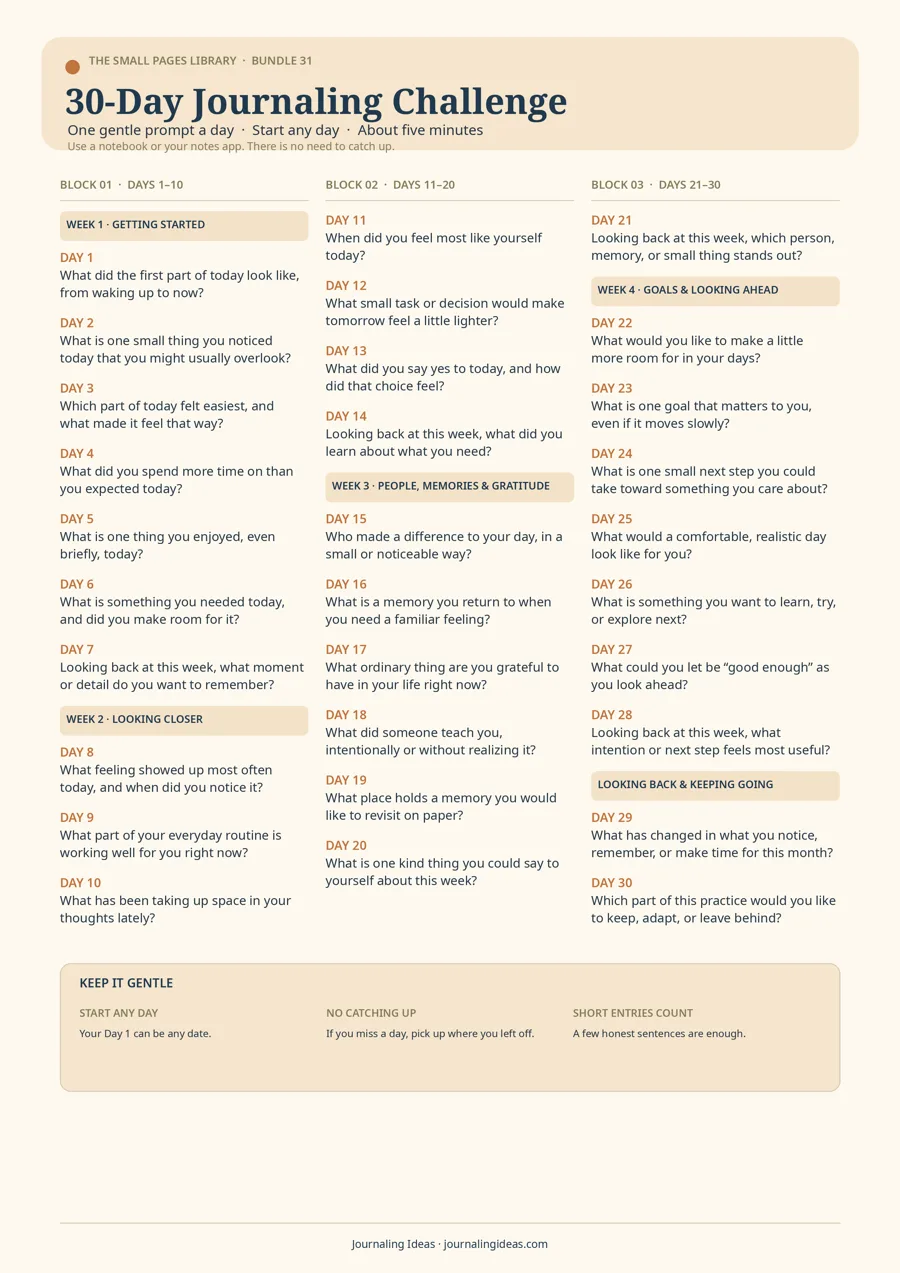
• The daily prompts: Use the free Challenge List to know what to write each day.
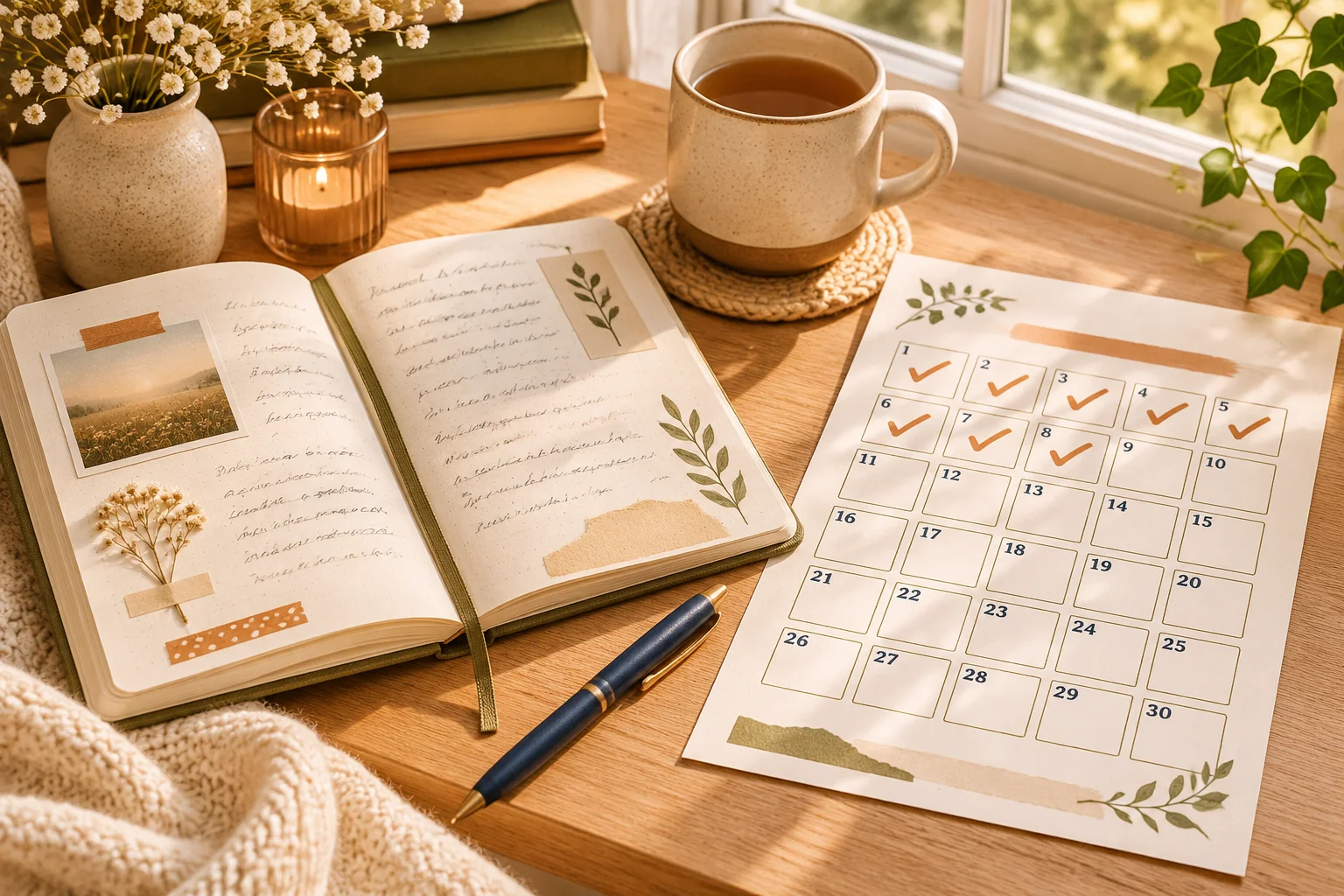
• The tracker: Use the second printable sheet to mark your progress.
• A few minutes: Five minutes is a useful starting point, but you can write for longer if you want.
You can also complete the challenge digitally. Keep the prompts open on your phone or computer and type your answers into a notes app or document.
There is no special equipment to buy and no need to prepare an elaborate journaling setup.
What Are the Gentle Rules of This Challenge?
The most important rule is that the challenge should fit into your life, rather than making your life fit around it.
Keep these five reminders in mind.
1. Start whenever you like. January 1 is an option, not a requirement. Your Day 1 can be any date.
2. Missed a day? Just continue. If you miss Tuesday, you can pick up with Tuesday’s prompt on Wednesday or whenever you return. You don’t have to complete two prompts to catch up.
3. Short entries count. One sentence, a few bullet points, or a small paragraph is enough. There is no minimum word count.
4. Don’t worry about perfect writing. Your journal is for your own thoughts. Spelling, handwriting, and presentation don’t need to be perfect. Messy counts.
5. Change a prompt if you need to. If a question doesn’t feel relevant, answer it in your own way or move to the next one. The prompts are here to support you, not to box you in.
What Are the 30 Daily Journaling Prompts?
The 30 prompts below are arranged into four weekly themes and a final two-day reflection. Each week has a theme and a short introduction.
Week 1 — Getting Started
The first week is about becoming comfortable with putting thoughts on paper. You don’t need to explore anything complicated. Start with the ordinary details of your day.
Day 1: What did the first part of today look like, from waking up to now?
Day 2: What is one small thing you noticed today that you might usually overlook?
Day 3: Which part of today felt easiest, and what made it feel that way?
Day 4: What did you spend more time on than you expected today?
Day 5: What is one thing you enjoyed, even briefly, today?
Day 6: What is something you needed today, and did you make room for it?
Day 7: Looking back at this week, what moment or detail do you want to remember?
Week 2 — Looking Closer
This week invites you to pay closer attention to your daily experiences. Think about what occupies your time, which routines suit you, and the small choices you make.
Day 8: What feeling showed up most often today, and when did you notice it?
Day 9: What part of your everyday routine is working well for you right now?
Day 10: What has been taking up space in your thoughts lately?
Day 11: When did you feel most like yourself today?
Day 12: What small task or decision would make tomorrow feel a little lighter?
Day 13: What did you say yes to today, and how did that choice feel?
Day 14: Looking back at this week, what did you learn about what you need?
Week 3 — People, Memories & Gratitude
The third week turns your attention toward the people and experiences that have become part of your story. You can write about a recent moment, an older memory, or something small you appreciate.
Day 15: Who made a difference to your day, in a small or noticeable way?
Day 16: What is a memory you return to when you need a familiar feeling?
Day 17: What ordinary thing are you grateful to have in your life right now?
Day 18: What did someone teach you, intentionally or without realizing it?
Day 19: What place holds a memory you would like to revisit on paper?
Day 20: What is one kind thing you could say to yourself about this week?
Day 21: Looking back at this week, which person, memory, or small thing stands out?
Week 4 — Goals & Looking Ahead
For the fourth week, think about what matters to you and what you’d like to make space for. These questions aren’t about creating a perfect plan. They’re about identifying a few things worth considering.
Day 22: What would you like to make a little more room for in your days?
Day 23: What is one goal that matters to you, even if it moves slowly?
Day 24: What is one small next step you could take toward something you care about?
Day 25: What would a comfortable, realistic day look like for you?
Day 26: What is something you want to learn, try, or explore next?
Day 27: What could you let be “good enough” as you look ahead?
Day 28: Looking back at this week, what intention or next step feels most useful?
Days 29–30 — Looking Back & Keeping Going
You’ve reached the final two prompts. Rather than treating the end of the challenge as a finish line, use these days to consider what you noticed during the month.
Day 29: What has changed in what you notice, remember, or make time for this month?
Day 30: Which part of this practice would you like to keep, adapt, or leave behind?
You can finish with a short paragraph or a few simple notes. There is no required conclusion.
How Can You Use the Two Printable Challenge Sheets?
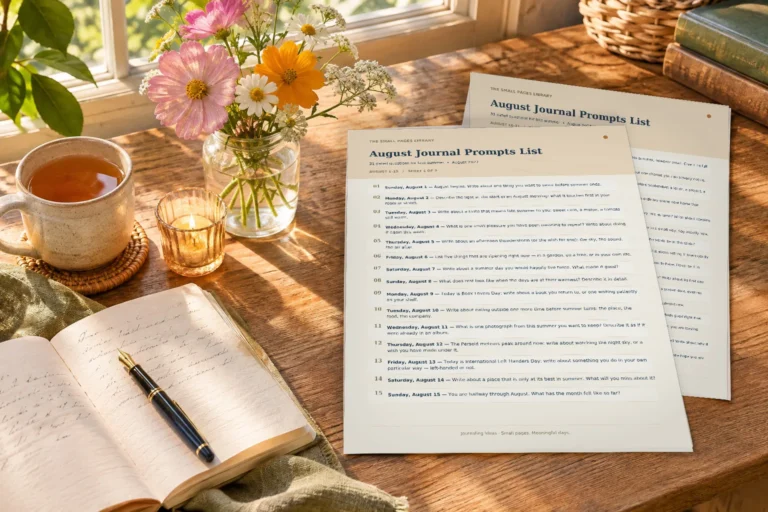
Sheet 1 — Challenge List: All 30 prompts are numbered and grouped into their weekly themes. Keep this sheet beside your journal.
Sheet 2 — Challenge Tracker: This undated tracker has 30 numbered boxes, a space for your start date, and a reflection area at the bottom.

The sheets are available in A4 and US Letter. That’s 2 sheets × 2 paper sizes = 4 PDF files in the pack.
You can print both sheets together or print only the one you need. Keep the tracker in your journal, on your desk, or somewhere you will see it.
What If You Want to Continue Journaling After Day 30?
You don’t have to turn the end of this challenge into another demanding routine.
You might enjoy continuing with one prompt whenever you feel like writing. You could also choose a weekly theme as a gentle focus.
Keep the tracker for another month and revisit the same prompts.
Try a different kind of daily writing. Explore one line a day journaling or another prompt list.
If you’re planning a New Year start, explore our january journal prompts for more seasonal writing ideas. That article has 31 daily dated prompts for January 2027.
If you prefer a smaller daily practice, our one line a day journal approach is another way to record a few simple lines each day. You can start whenever and keep it going in a notebook of your choice.
Most importantly, remember that 30 days is a beginning, not a promise of a lifelong habit. Habits often take longer than a month to develop.
The month is simply an opportunity to begin, explore different questions, and notice which kind of writing helps you most.
Journaling is personal reflection. It can be a meaningful writing practice, but it isn’t a substitute for medical or mental-health care.
Frequently Asked Questions About the 30-Day Journaling Challenge
Can I start the challenge whenever I want?
Yes — the pack is undated and the month is not tied to a date. Start on the 1st, the 12th, or any other day.
How long does each day take?
Plan for about five minutes a day. Some entries take longer, and others will take only a minute. There is no required length.
What if I miss a day?
Missing a day is normal, and it does not break the challenge. You can write that prompt the next day, skip it, or simply begin with the next prompt. You don’t have to catch up.
Do I need to write every day, or can I write when I feel like it?
You can write when you feel like it. The numbered order gives you a path to follow, but there is no schedule to keep — write daily, a few times a week, or whenever you have a quiet moment. Each prompt takes about five minutes.
What should I do if my answer won’t come?
Start with the prompt itself, even if your first line is short. Once you have one sentence, the next one feels more natural.
Can I use the challenge more than once?
Yes. The pack has no date on it, so it stays useful beyond January. Print the sheets again if you want to start a fresh month.
Start Your 30-Day Journaling Challenge
You don’t need to wait for a new year, a new notebook, or the perfect moment to begin.
Choose a date, open your journal, and start with Day 1. Let the next prompt wait until tomorrow.
Download the free two-sheet Challenge Pack from The Small Pages Library, print it in A4 or US Letter, and use it at your own pace.
Small pages. Meaningful days.
— Journaling Ideas Editorial Team



One Comment