
27 November Bullet Journal Ideas for Beginners (Free Printable Setup Pack)
Easy November bullet journal ideas include a simple month cover, a dated monthly list, one habit tracker, a gratitude log, and a weekly spread. Start with pages you will use, then add optional fall details such as leaves, warm colors, or a reading list. You do not need drawing skills or special supplies.
Below are 27 ideas you can copy with a pen and an ordinary notebook, grouped by the kind of page you want to make. Choose a few favorites, or use the free November setup pack to skip drawing the layouts.
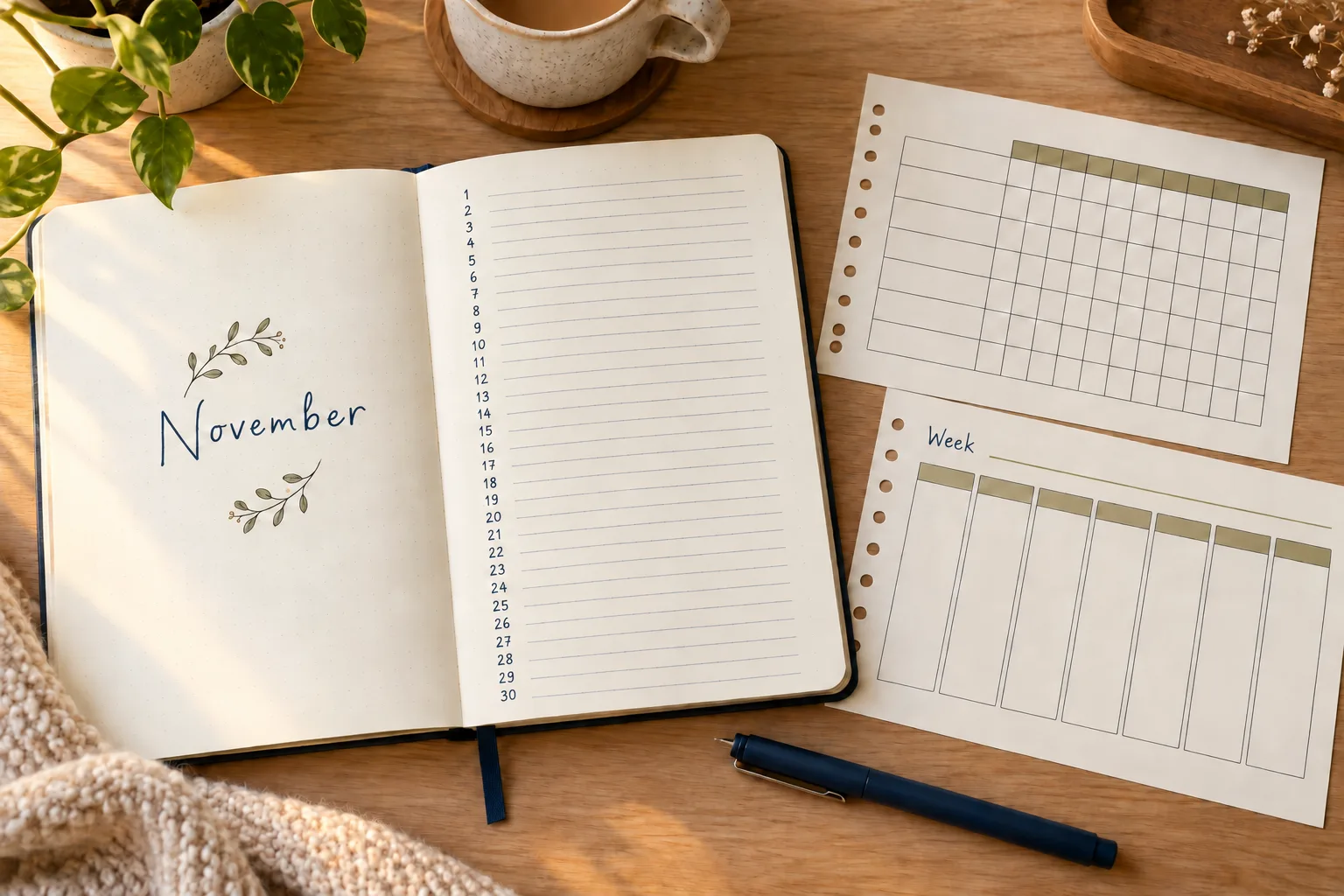
Free November setup pack
Get a November cover page, habit tracker, gratitude log, and weekly spread in A4 and US Letter through The Small Pages Library. The library is open — free direct access, no signup needed.
On this page
- What supplies do you need?
- Which pages should you start with?
- November cover pages: ideas 1–4
- Monthly setup pages: ideas 5–8
- November trackers: ideas 9–13
- Gratitude and reflection pages: ideas 14–18
- Cozy fall and seasonal pages: ideas 19–23
- Weekly and daily spreads: ideas 24–27
- What is in the free printable setup pack?
- How to set up November in 20 minutes
- Beginner mistakes to avoid
- Frequently asked questions
What do you need for a November bullet journal?
Start with what you already have:
- A notebook or loose paper. Plain, lined, squared, and dotted pages all work.
- A pen. Choose one that feels comfortable to write with.
- A pencil and eraser, if helpful. Use them to mark a layout before adding pen.
- A ruler, if you want straight lines. Freehand lines are fine, too.
One colored pencil or highlighter is enough for an optional fall accent. Stickers, washi tape, brush pens, and a new notebook are not required.
If you use the printables, you will also need printer access. Keep them as loose sheets, put them in a folder, or attach suitably sized pages to your notebook.
Which November bullet journal pages should you start with?
Choose pages around something you want help remembering, planning, or noticing. You do not need all 27.
| If you want to… | Start with… | Keep it simple by… |
|---|---|---|
| Remember appointments | Monthly date list, idea 5 | Writing only dated commitments |
| Plan the next few days | Seven-box weekly spread, idea 24 | Adding one main task per day |
| Follow one small routine | Habit tracker, idea 9 | Tracking just one habit |
| Write a little each evening | Gratitude log, idea 14 | Using a phrase instead of a paragraph |
| Make the notebook feel seasonal | Plain November cover, idea 1 | Adding one underline |
For a first setup, try the monthly date list and one weekly page. Add a tracker or gratitude log only if you want somewhere to record those things.
What are some easy November bullet journal cover ideas?
A cover page marks the start of the month. It can be decorative, but a single word on a mostly blank page works just as well.
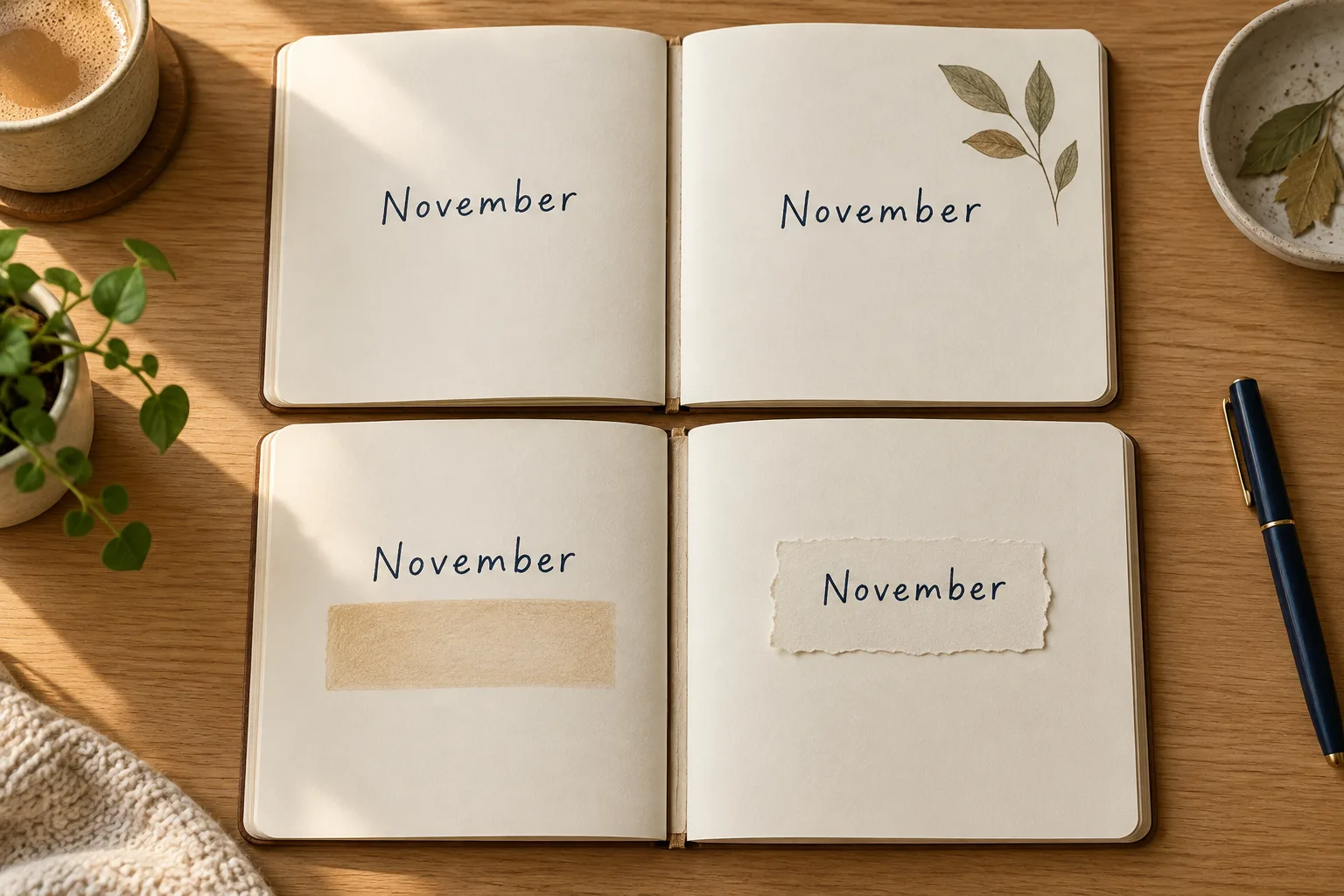
1. Plain November title page
Write “November” in your normal handwriting and leave plenty of space around it. This cover is easy to copy when lettering feels intimidating.
How to do it: Write “November” near the center, add the year underneath, and draw one short underline.
2. Leaf-corner cover
A few small leaves in one corner give the page a fall feel without filling it with drawings. Each leaf can be two curved lines meeting at a point.
How to do it: Write the month in the middle, then draw three small leaf shapes in the bottom corner with a line through each.
3. Warm color-block cover
Use a single patch of color behind or beneath the month name. An uneven shape is part of the handmade look.
How to do it: Shade a small rectangle with a sand or olive pencil, then write “November” above it in dark pen.
4. Torn-paper cover
A scrap of plain paper makes a simple label for the month. Use something already on hand, such as the blank inside of an envelope.
How to do it: Tear a small rectangle, write “November” on it, and glue it onto an otherwise blank page.
Which monthly setup pages are useful in November?
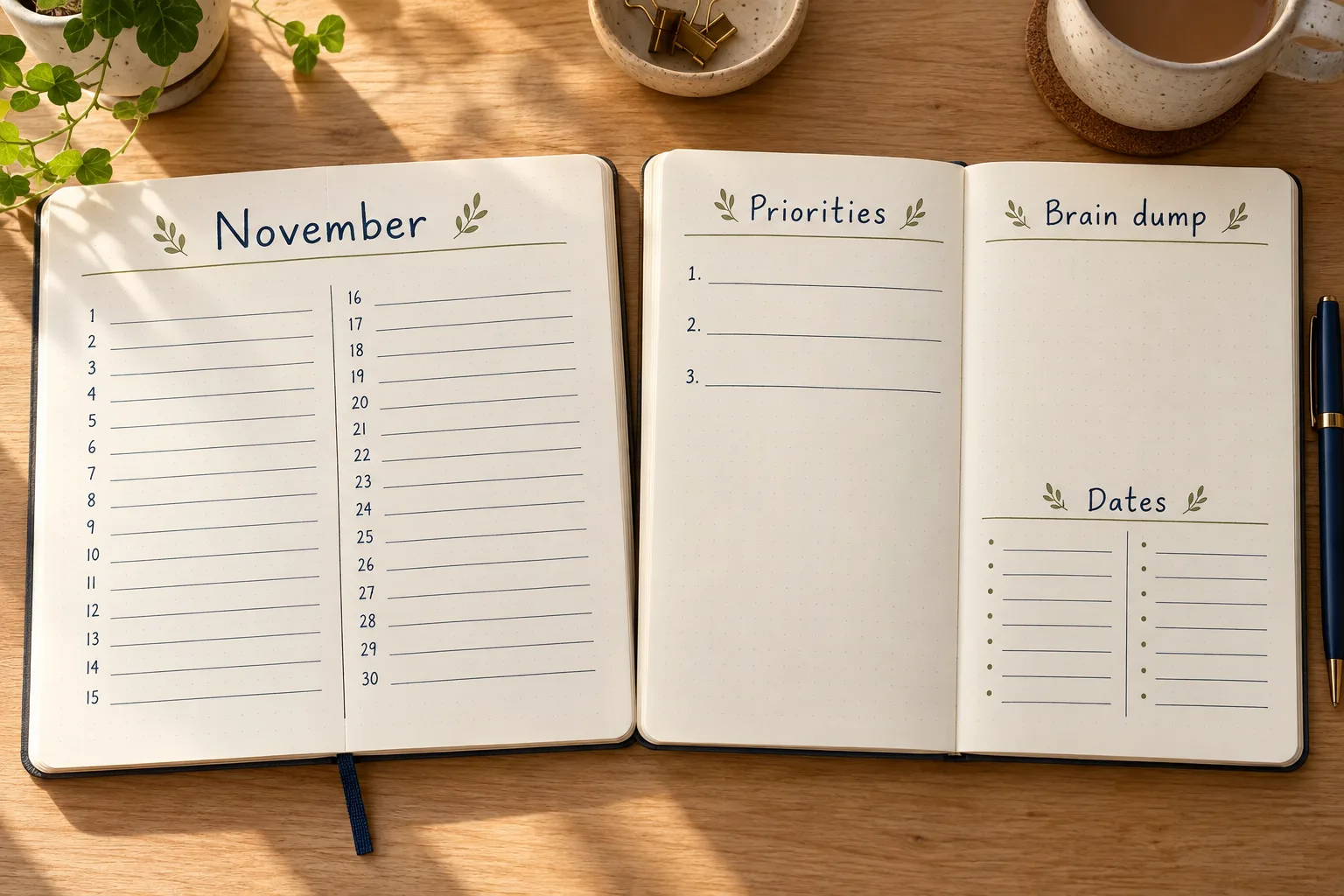
Monthly pages give appointments, reminders, and loose thoughts a place to land. Choose a list layout if drawing a calendar feels like extra work.
5. Monthly date list
A date list gives every day its own line without requiring a calendar grid. It also avoids squeezing appointments into tiny boxes.
How to do it: Write numbers 1–30 down the page, splitting them across two pages if needed, and add commitments beside the dates.
6. Three gentle priorities
Give a few meaningful plans some space. These might be booking an appointment, finishing a book, or making time for a friend.
How to do it: Write “This November,” add three bullet points, and put one small next step beneath each.
7. November brain dump
Use this page for thoughts that do not have a date yet: errands, ideas, questions, and things to remember. Sorting can wait.
How to do it: Title a blank page “On my mind,” write freely, then circle anything that needs a place in your plans.
8. Important dates and reminders
Keep useful dates together, especially when the month includes gatherings, travel, school events, or deadlines. Include only the occasions that matter to you.
How to do it: Make two columns labeled “Date” and “Remember,” then add one event or reminder per line.
What can you track in a November bullet journal?
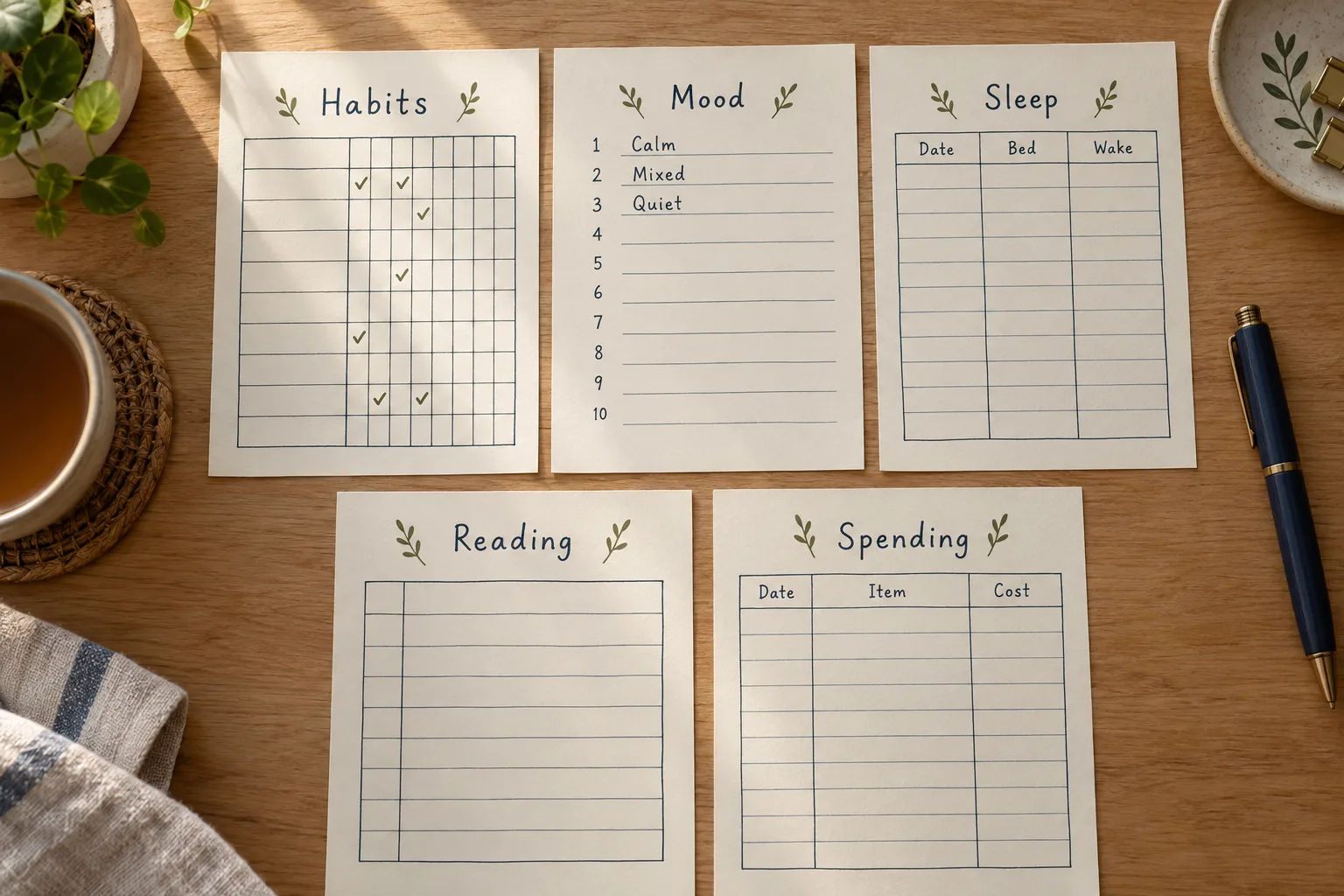
Track something you are curious about, rather than everything you could measure. One useful row is enough.
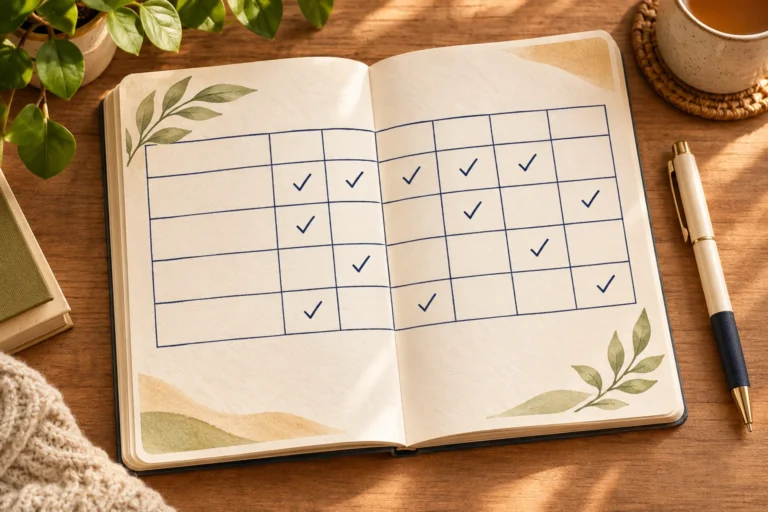
9. Simple habit tracker
Choose a small action you can clearly mark as done, such as reading a page or preparing your bag. Leave enough room to write the habit comfortably.
How to do it: Write one habit beside a row of 30 numbered spaces, then mark the date whenever you do it.
For a ready-made option, browse the free habit tracker printables.
10. One-word mood log
A mood log can be a brief record of how the day felt. Words allow for more nuance than choosing a single color.
How to do it: Number 30 lines and write one word or a short phrase beside the current date, such as “mixed” or “quiet evening.”
11. Sleep notes
Keep a simple record if you want to notice your sleep routine. There is no need to draw a detailed chart or grade each night.
How to do it: Make columns for “Date,” “Bedtime,” “Wake-up,” and “Notes,” and fill in what you remember.
12. Reading tracker
Give November reading a small space without setting a book target. A few pages, a chapter, or an audiobook session can all be recorded.
How to do it: List dates down one side and note what you read or listened to beside each date you use.
13. Everyday spending log
Record purchases you want to remember without building a full budget spread. Leave out payment details and other sensitive information.
How to do it: Draw three columns labeled “Date,” “Purchase,” and “Amount,” then add entries as needed.
Prefer to print the layout?
The free November setup pack includes a habit tracker alongside the cover page, gratitude log, and weekly spread. Choose A4 or US Letter in The Small Pages Library — free, no signup needed.
What are some simple November gratitude and reflection pages?
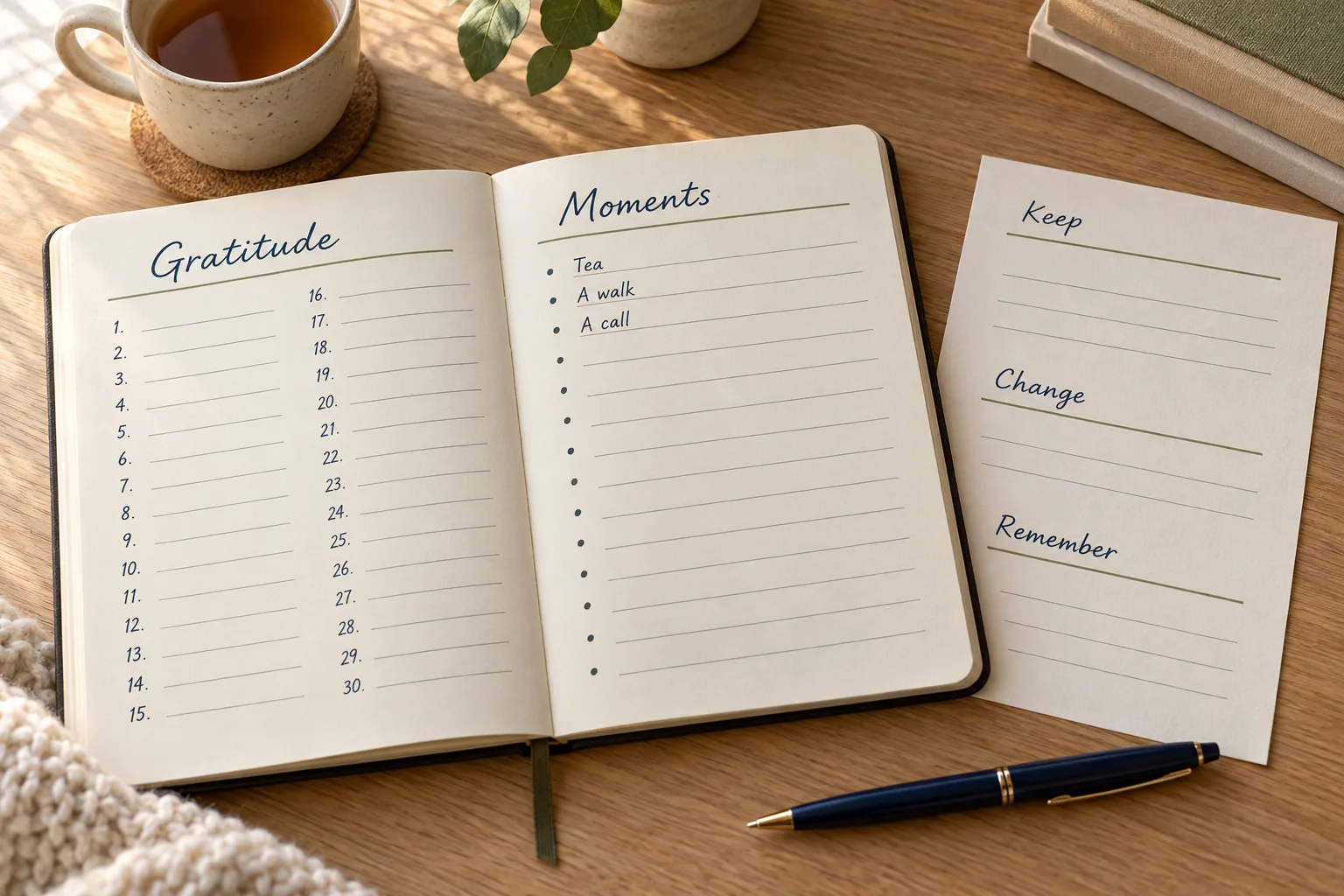
Reflection does not have to mean a long entry. A sentence, a list, or a few ordinary details can fill the page over time.
14. One-line gratitude log
Give each November date space for one thing you appreciated. Small details belong here: a warm meal, a helpful message, or a few minutes alone.
How to do it: Number lines 1–30 and add a word, phrase, or sentence whenever you want to make an entry.
15. Small moments worth keeping
Collect moments you might otherwise forget. This page can mix snippets of conversation, observations, and little things you enjoyed.
How to do it: Title the page “Worth keeping” and add short, undated notes throughout November.
16. People to thank
Keep a list of people whose help or company you appreciated. You can write a message later, but making the list does not create another obligation.
How to do it: Write a name, add what you appreciated, and leave a small checkbox for an optional thank-you.
17. Midmonth check-in
Pause partway through November to see whether your pages still suit your days. You can change the setup instead of trying to keep an unhelpful layout going.
How to do it: Answer three questions: “What is helping?”, “What feels like too much?”, and “What can I simplify?”
18. End-of-month reflection
Leave a little space to look back before starting December. Include what was difficult as well as what you enjoyed.
How to do it: Make three headings—”Keep,” “Change,” and “Remember”—and write one sentence beneath each.
If a blank page feels difficult, browse the journal prompts for a starting question.
How can you make a fall bullet journal feel cozy without drawing?
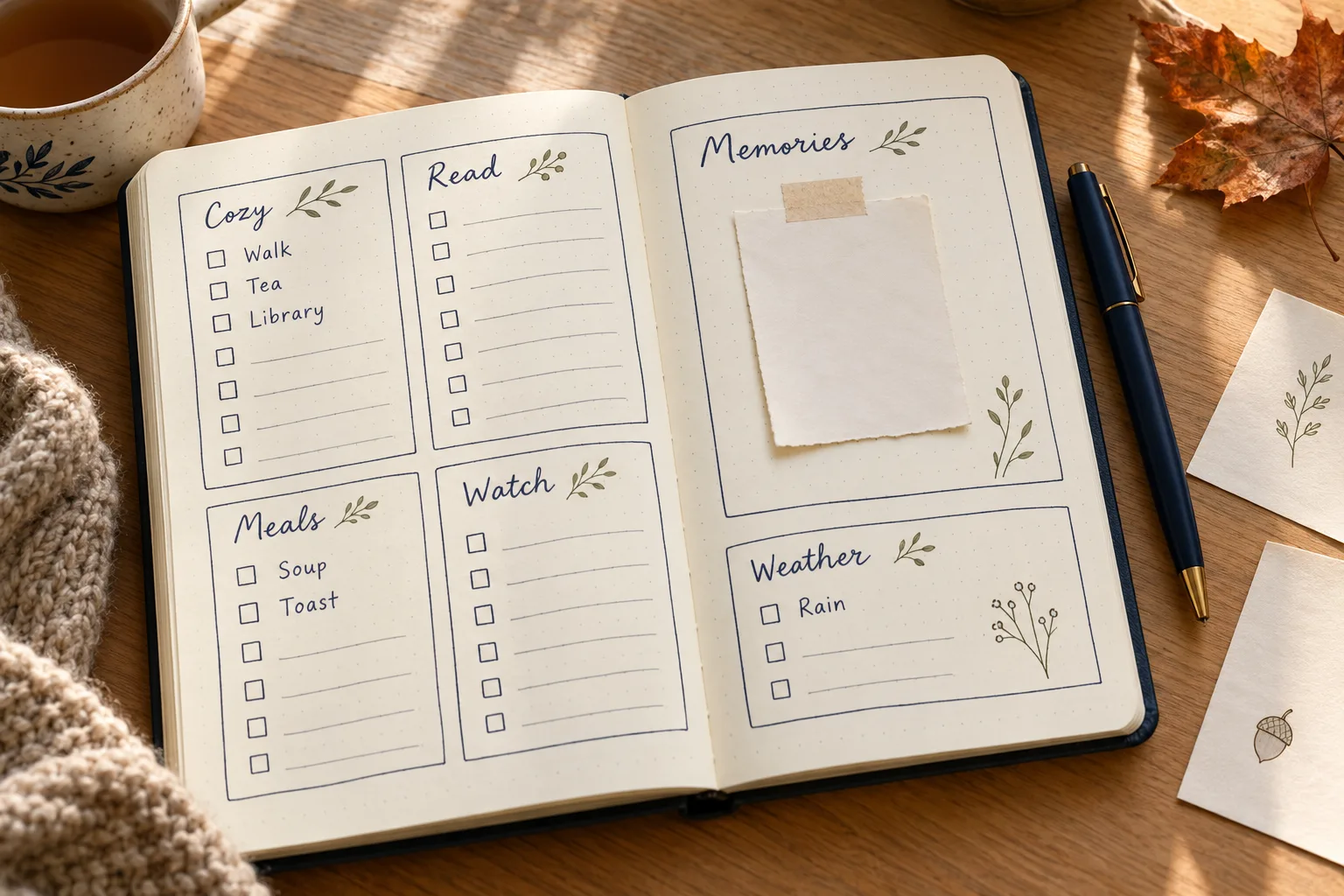
Seasonal pages can come from words, colors, and paper scraps. Pick details that match your actual November, whether that means rainy afternoons, busy weekends, or time indoors.
19. Cozy things to do list
Collect a few comforting activities you would enjoy trying. Treat the page as a menu, with no need to finish everything.
How to do it: Write five options, such as visiting the library, making soup, or taking a short walk, and choose one when it suits your day.
20. November reading and watching list
Keep recommendations in one place instead of relying on saved posts. Add only a few so the page stays easy to browse.
How to do it: Divide a page into “Read” and “Watch,” then write titles with a little room for a later note.
21. Warm meals page
Make a practical list of familiar meals for days when deciding feels like work. It can be seasonal without requiring new recipes.
How to do it: Write three headings—”Quick,” “Comforting,” and “Use what’s here”—and add a few meals under each.
22. One-scrap memory page
Keep a small paper reminder from the month. A ticket, label, or handwritten note can give the page character without any illustration.
How to do it: Attach one flat paper scrap, cover any private details, and write the date plus one sentence beside it.
23. One-line weather notes
Notice the season through a brief observation. You can describe the light, temperature, or view without drawing weather symbols.
How to do it: Add a dated line such as “Rain against the window” or “Bright afternoon, cold hands” whenever something catches your attention.
Which weekly and daily spreads are easiest for beginners?

Start with enough room for the next few days. You can leave future weeks blank until you know what space you need.
24. Seven-box weekly spread
Give each day a space for appointments, tasks, or a short note. Add dates yourself so the layout works for any November week.
How to do it: Divide a page or two-page spread into seven roomy boxes, label the days in your preferred order, and write in the dates.
25. Running weekly task list
Use one list for tasks that can happen on several different days. This saves rewriting an unfinished task in a new daily box.
How to do it: Write “This week,” list tasks with a small checkbox beside each, and add a day only when timing matters.
26. Three-line daily log
A daily page can be very small. Record the essentials, then leave yourself room to stop.
How to do it: Write the date followed by three lines: one thing to do, one thing to remember, and one thing you noticed.
27. Weekly reset page
Use a short review to make the next week easier to see. You do not need to copy every unfinished task forward.
How to do it: Add “Carry forward,” “Let go,” and “Next week,” then put only the relevant notes beneath each.
What is included in the free November printable setup pack?
The November setup pack contains four printable page designs: a cover page, habit tracker, gratitude log, and weekly spread. Each comes in A4 and US Letter.
That means four designs with two paper-size versions each. You only need to download the size you use.
The pages have readable headings, dark text, light borders, and open writing space. They are designed to use as printed, without adding decoration.
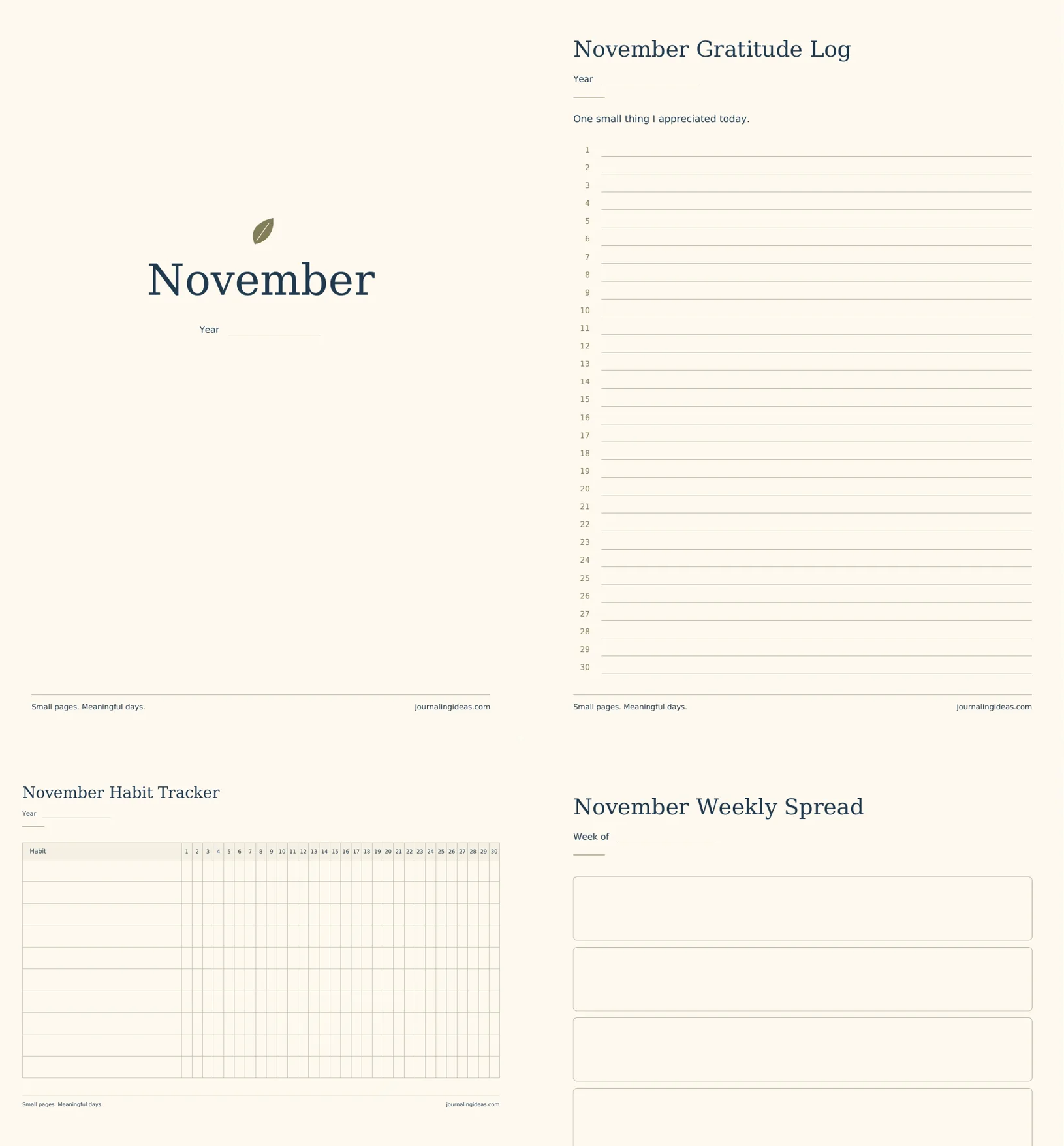
November cover page PDF
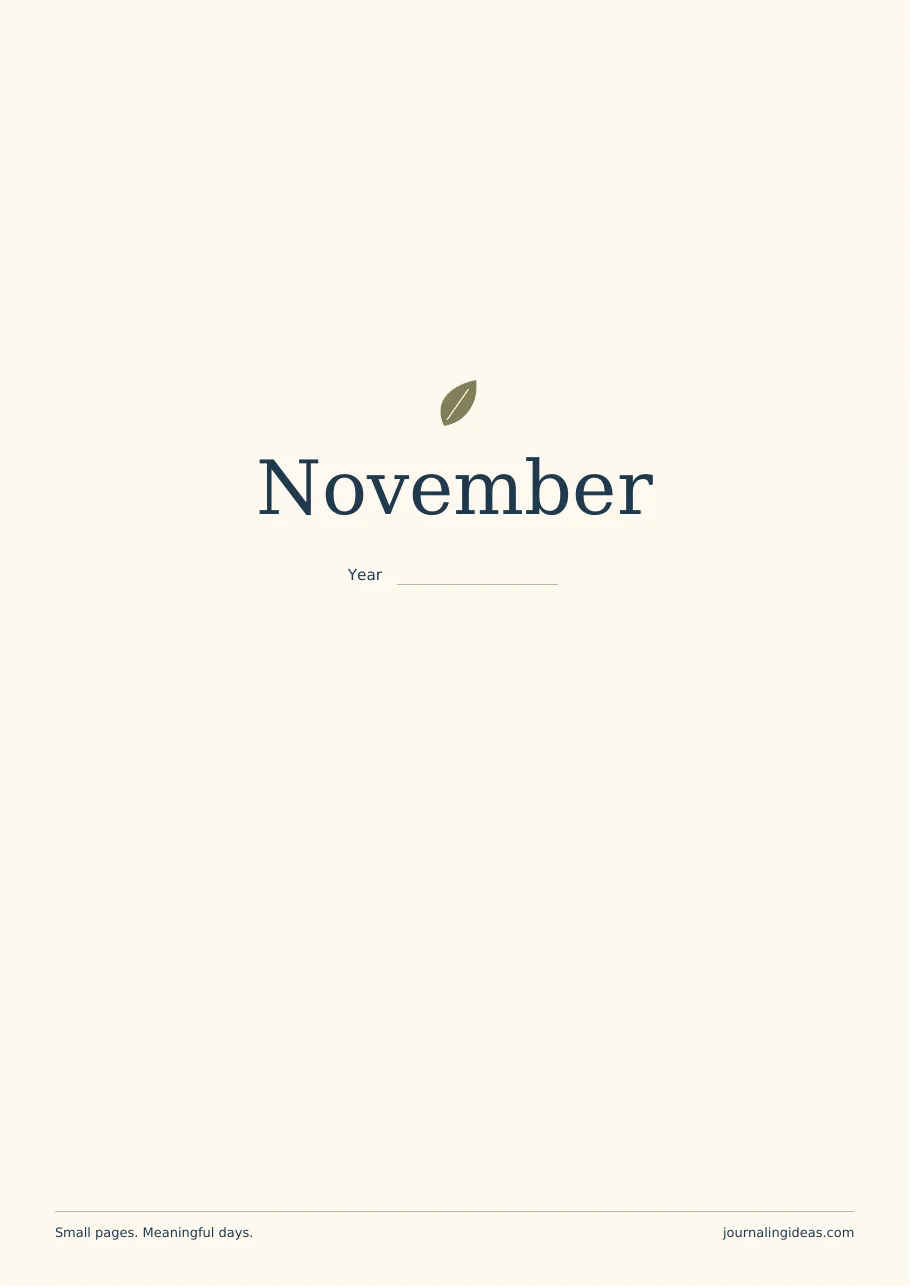
The cover has “November” as its main heading, a blank “Year” field, and a small olive leaf detail. The rest of the page stays open, with the tagline “Small pages. Meaningful days.” and journalingideas.com in the footer.
There is no calendar on the cover, so it can be reused in a future November.
November habit tracker PDF
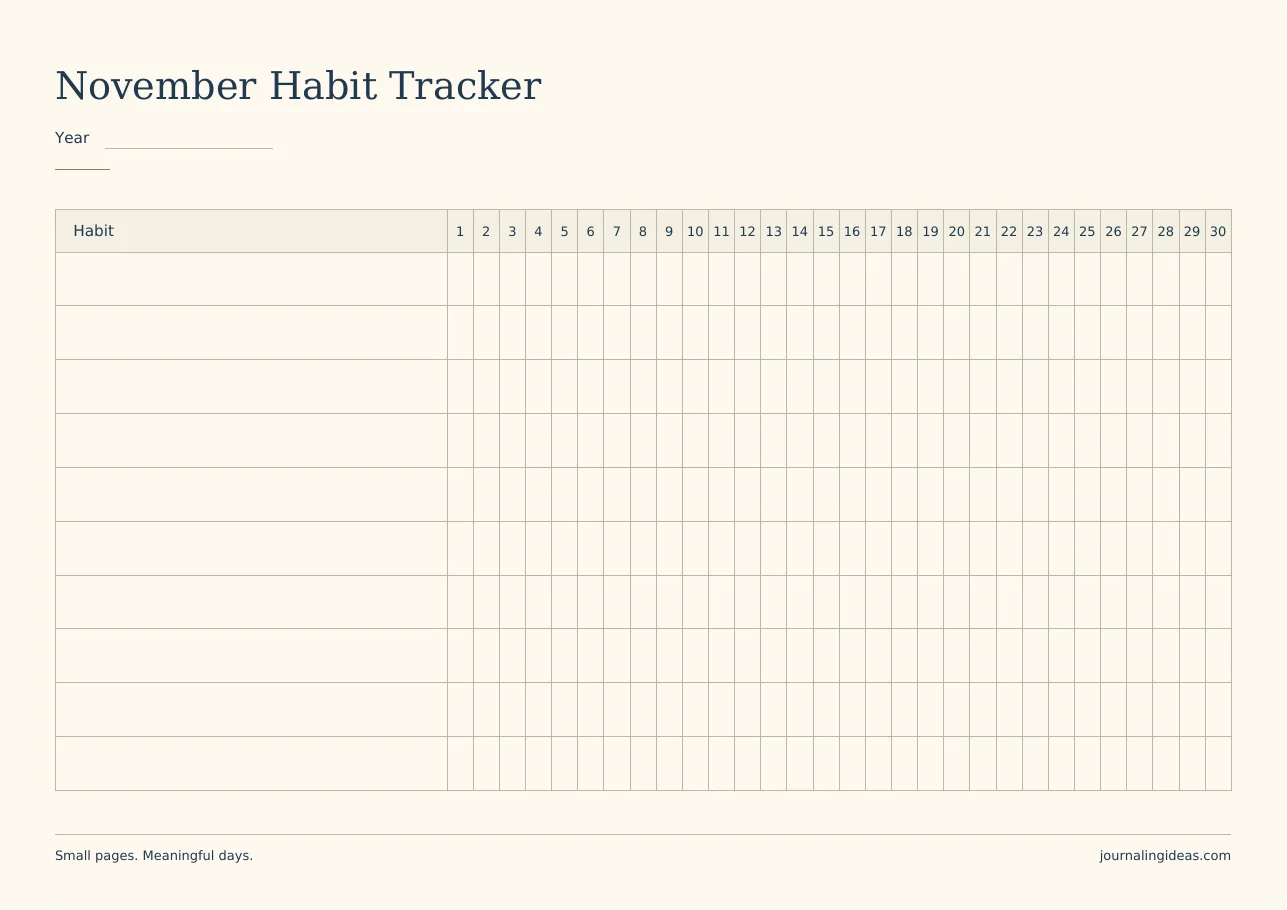
The tracker has a “November Habit Tracker” heading, a blank “Year” field, and 10 habit rows. A wide habit-name column takes about one-third of the usable table width, with dates 1–30 across the remaining space.
The date columns use numbers only, with no weekday names. You can use the tracker in any year, and you do not need to fill every habit row.
November gratitude log PDF
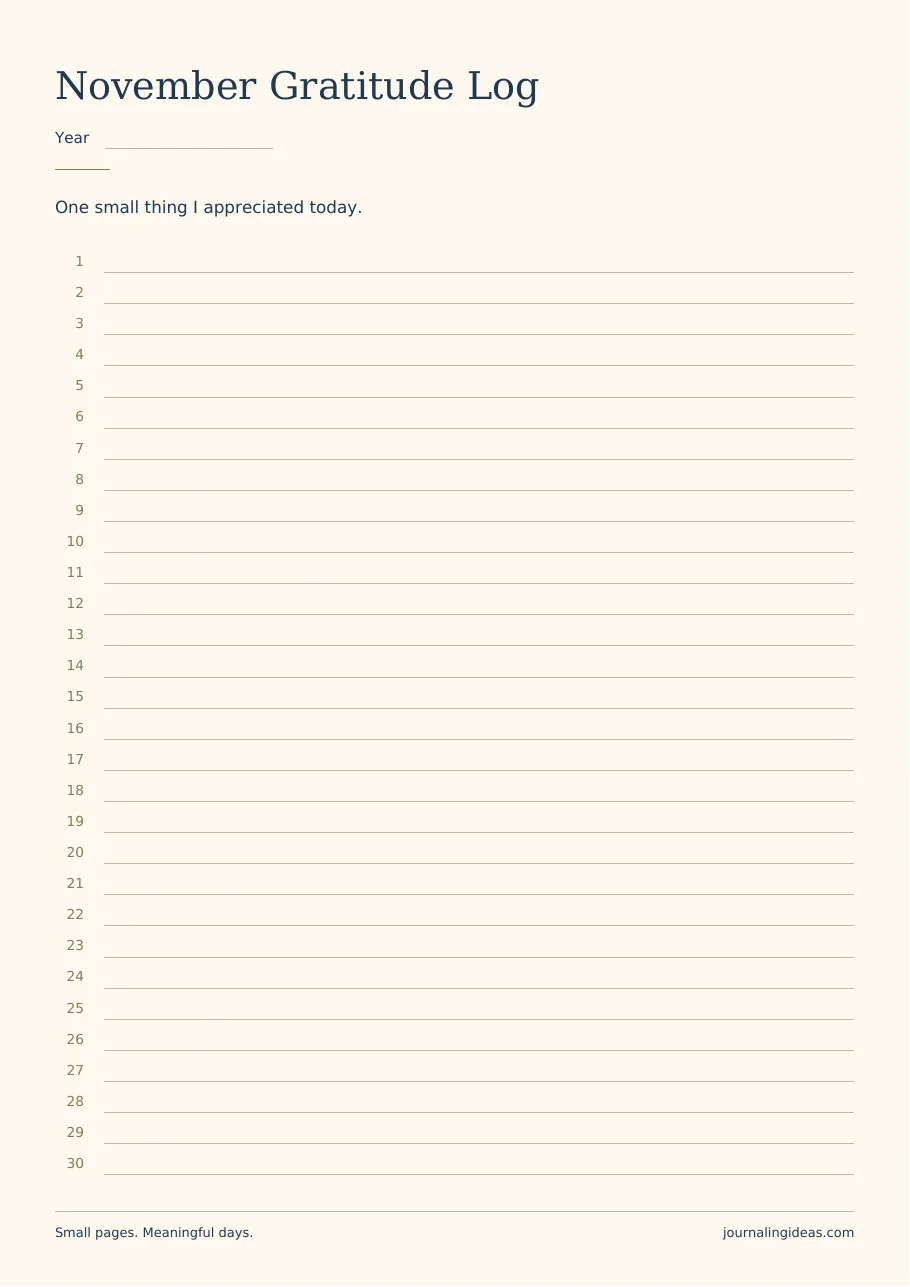
The gratitude page has a “November Gratitude Log” heading, a blank “Year” field, and 30 numbered writing lines. The prompt at the top reads: “One small thing I appreciated today.”
Each date has room for a short entry. Write a phrase or a sentence, and leave missed dates blank.
November weekly spread PDF
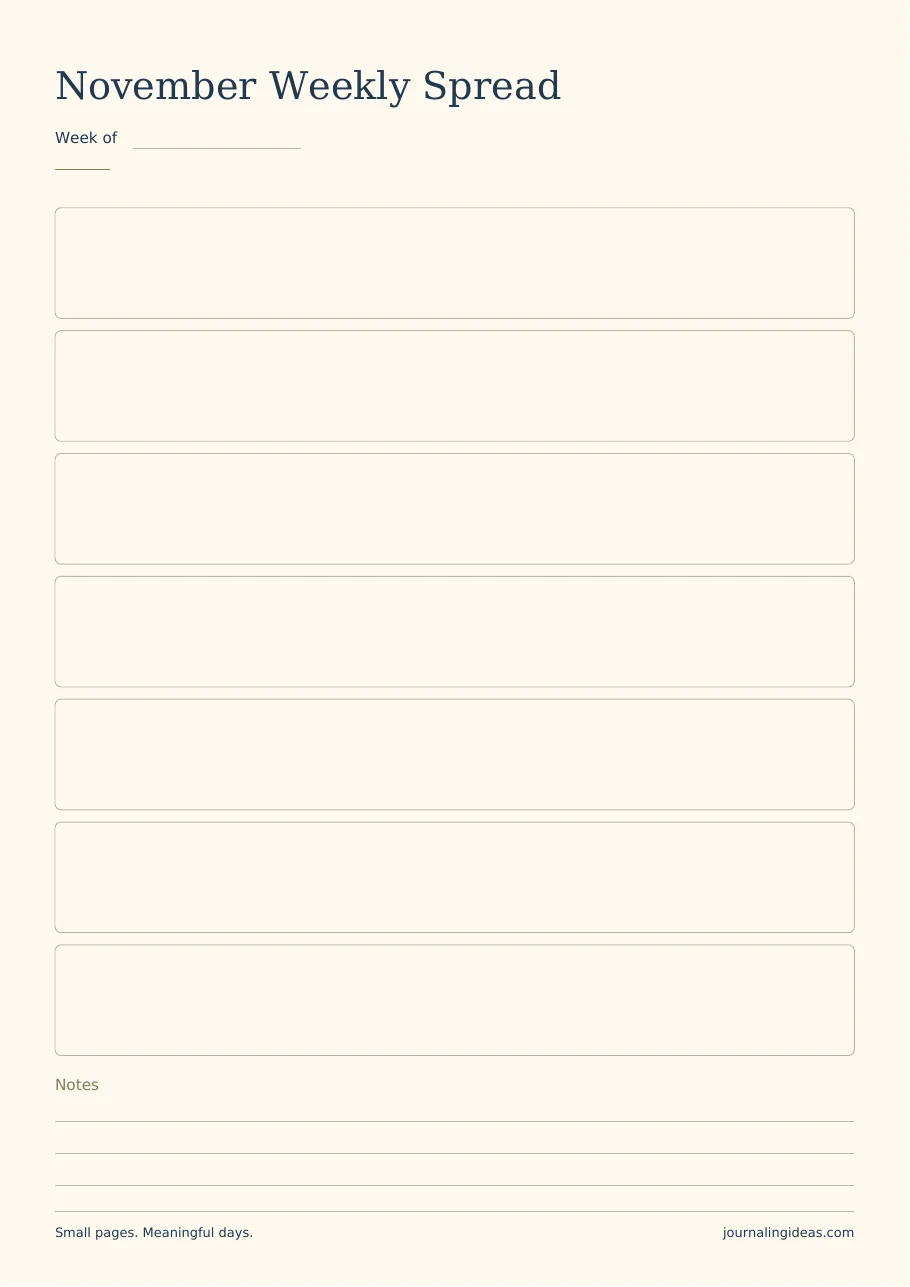
The weekly page has a “November Weekly Spread” heading, a blank “Week of” field, seven roomy day boxes, and a small “Notes” area.
The day boxes are unlabeled and undated. Add weekdays and dates in the order you prefer, including dates from October or December when a week crosses months. Print another copy whenever you need a new week.
How do you access and print the pack?
- Open The Small Pages Library.
- Choose the November setup pack.
- Choose the A4 or US Letter version.
- Download the pack.
- Print at Actual size or 100%.
For full-size printing, select the matching paper size and start with Actual size or 100%. Check the preview before printing all the pages. If your printer clips the edges, use Fit to printable area; this may make the page slightly smaller.
These are A4 and US Letter downloads, not A5 files. To fit one into a smaller notebook, reduce the scale and test a single page before trimming it.
How do you set up your November bullet journal in 20 minutes?
Use this as a time limit for a small working setup. Leave decoration for another day if you want it.
- Choose your pages — 2 minutes. Pick a monthly date list and a weekly spread. Add one habit tracker or gratitude log if it feels useful.
- Mark the month — 2 minutes. Write “November” and the year on a cover or at the top of your first page. A separate cover is optional.
- Add a monthly overview — 5 minutes. Number lines 1–30, allowing space for each entry. Add the appointments and deadlines you already know.
- Prepare the coming week — 5 minutes. Draw seven simple boxes or use the printable weekly spread. Add the correct dates, fixed commitments, and a few tasks.
- Set up one optional log — 4 minutes. Write one habit beside 30 date marks, or prepare numbered lines for gratitude entries. If drawing the grid takes too long, use a simple list.
- Make your first entry — 2 minutes. Add today’s note, task, or observation. Put the notebook somewhere you will remember it.
If the time runs out, stop with the pages you have. A half-filled setup can still be useful.
What beginner mistakes should you avoid?
- Making every idea at once. Choose two or three pages first, then add something when you have a reason to use it.
- Drawing boxes before checking writing space. Try a normal appointment or habit name in pencil before finishing the layout.
- Using the wrong number of dates. November has 30 days. Stop the monthly list and trackers at 30.
- Copying weekdays from an old example. If you make a calendar, check the correct year before placing the dates. A numbers-only tracker avoids this issue.
- Choosing unclear habits. Replace “be better at reading” with something you can mark, such as “read one page.”
- Treating blanks as a problem to repair. Resume on the current date. You do not have to reconstruct missed entries.
- Decorating before adding plans. Put appointments, writing space, and useful labels in place first.
- Rewriting a whole page over a small mistake. Cross out a word, cover it with a paper scrap, or keep going. Messy counts.
Frequently asked questions
What should I put in my November bullet journal?
Start with a monthly date list and a weekly planning page. Add a habit tracker, gratitude log, or reading list if you want one. A cover and seasonal pages are optional; choose pages you expect to open again.
Can I start a November bullet journal after the month begins?
Yes. Begin with the current date and add upcoming plans. You can leave earlier dates blank or make a shorter list covering the rest of the month.
Do I need a dotted notebook or drawing skills?
No. A lined notebook, squared paper, or plain sheets can work. Write headings in your usual handwriting and use lists or simple boxes. Decoration is optional.
How do I make a November calendar that works for the right year?
Check a calendar for your chosen year before assigning weekdays to dates. Place November 1 beneath the correct weekday and continue through November 30. If you prefer to skip the grid, use a date list numbered 1–30.
Is the November printable setup pack free, and do I need to sign up?
The four printable designs are free through The Small Pages Library, with A4 and US Letter versions available. No signup is needed — the library is open. Printer access and paper are not included.
Where should you go next?
Choose one page you would like to use tomorrow. That is enough to begin.
If you prefer ready-made layouts, get the free November setup pack through The Small Pages Library. No signup needed — just choose A4 or US Letter.
You may also find these useful:
- Free habit tracker printables — ready-made layouts for recording small routines.
- Browse habit trackers — explore the tracker collection.
- Browse free printables — find printable pages for your notebook or folder.
- Bullet journal for beginners — set up your first notebook in 30 minutes.
Save this guide to your November Bullet Journal Ideas board so you can return to a layout when you need it.
If you share a page, you can use #SmallPagesClub. Your everyday handwriting belongs here, too.
Small pages. Meaningful days.
About the publisher: The Journaling Ideas Editorial Team creates journaling ideas and printable planning pages with simple instructions for beginners.
3 Comments