
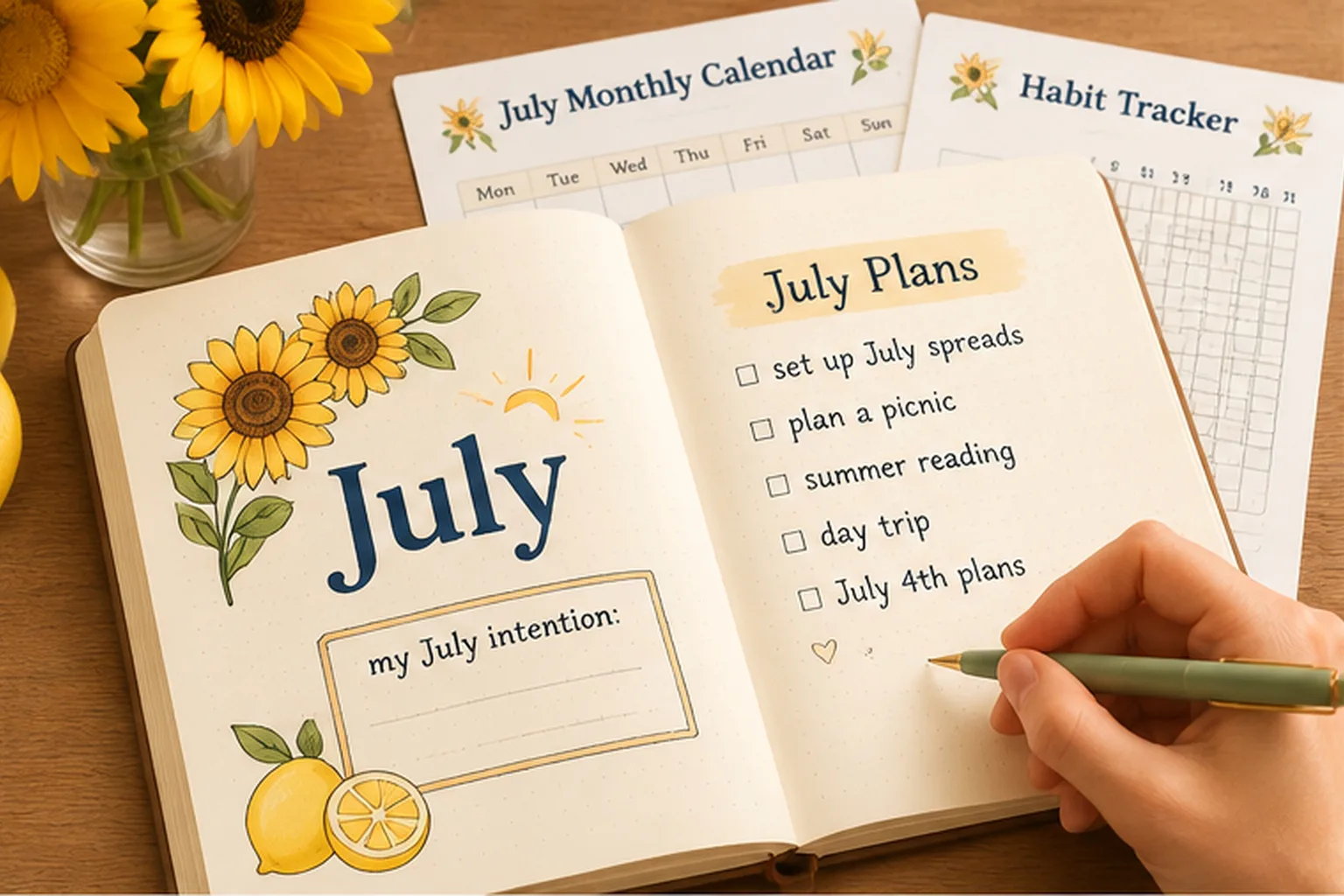
July Bullet Journal Ideas: 20 Simple Spreads for a Bright Mid-Summer Month
July bullet journal ideas can help you organize a busy summer month without filling your notebook with complicated layouts. Explore 20 simple spreads for planning, tracking, summer memories and reflection, plus a free six-sheet July Bullet Journal Setup Pack in A4 and US Letter. No signup is needed. Start with one page.
July is a good time to give your journal a lighter, more seasonal feel. You might want a colorful cover, a simple monthly calendar, a habit tracker or a page for collecting little summer memories. You do not need to create all 20 spreads. Choose the pages that make sense for your month and leave the rest.
If you are new to this style of planning, our Bullet Journal for Beginners guide explains the basic page types, symbols and setup process. You can use those foundations to build a July journal that fits your own routine.
July at a Glance
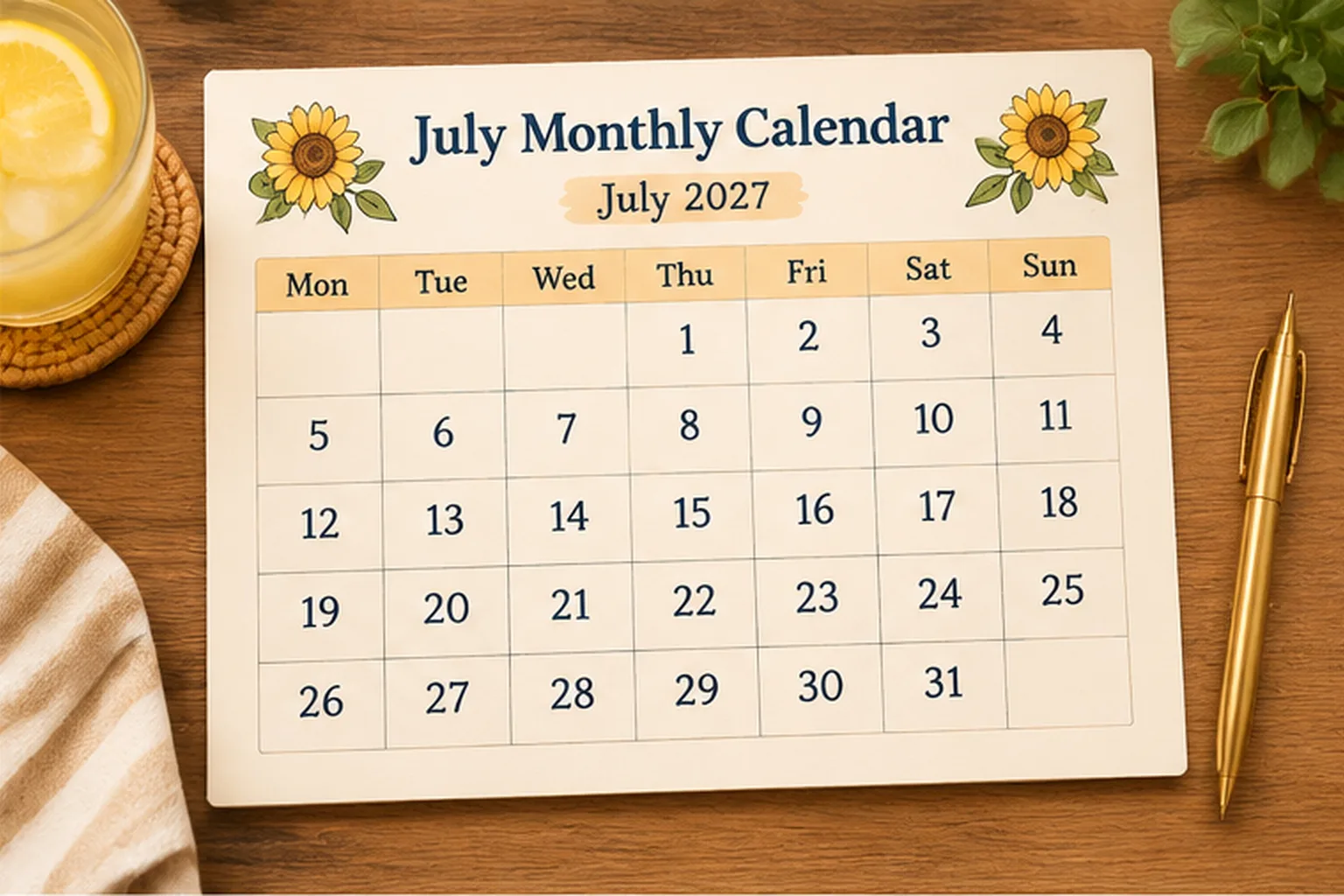
July 2027 begins on Thursday, July 1, and ends on Saturday, July 31. The month has 31 days, and the Monday-start calendar places July 1 under Thursday, July 2 under Friday, July 3 under Saturday and July 4 under Sunday. In the United States, Independence Day falls on Sunday, July 4, 2027.
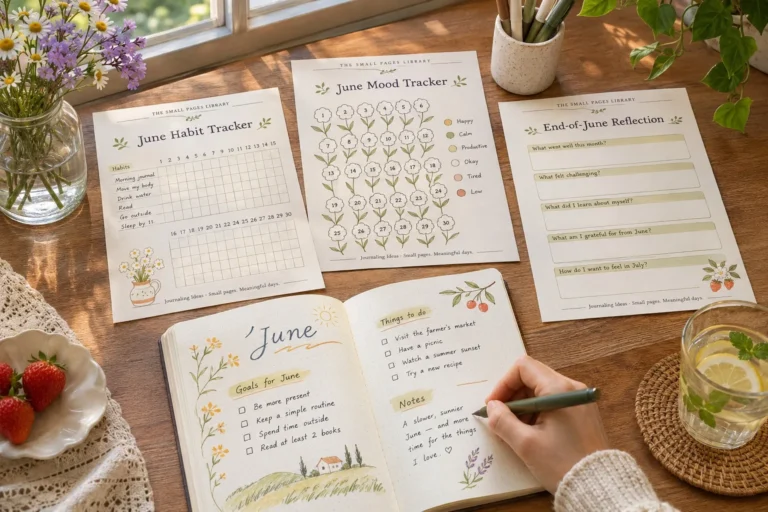
If you are building a seasonal notebook one month at a time, you can also revisit June Bullet Journal Ideas and May Bullet Journal Ideas for earlier-month layouts and inspiration.
How to Choose Your July Bullet Journal Pages
Think about what you actually need from your notebook before drawing boxes. If July is busy, start with the monthly calendar and a weekly spread. If you want to notice routines, add one tracker. If summer is full of outings, family time or small moments you want to remember, choose a memory page or bucket list.
You can draw any of these ideas by hand, adapt them to a notebook you already own, or use the matching pages in the free setup pack. Keep the layout simple enough that you will want to return to it. A page with a few useful spaces is often easier to maintain than a decorative spread that takes too long to finish.
July Is a Mid-Year Month, Not a Fresh Start
July tempts people to declare a second New Year, and it rarely works — the middle of the year is a checkpoint, not a beginning. What July does well is honesty: six months of real behavior are now visible in your trackers, and this setup’s logs let you see them plainly. Independence Day falls on Sunday, July 4, 2027 in the United States, so the holiday sits inside a summer weekend rather than breaking a work week — expect a slower, more social start to the month, and plan the first weekly spread lightly. Our July journal prompts are written for this mid-year mood.
The practical July skill is protecting a routine through heat, travel and visitors. Keep the weekly spread simple enough to survive a week away, let the habit tracker shrink to its minimum viable version rather than breaking entirely, and use the month-end reflection for the only question July really asks: with half the year left, what is still worth your evenings? Answer in ink, briefly, and let August build on it.
Start Your July
1. July Cover Page
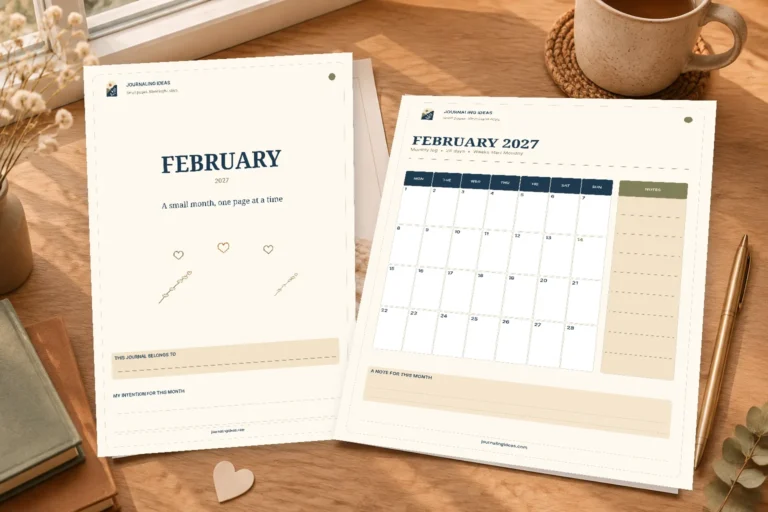
Give the month a clear first page with a large “July” heading and one summer motif. Sunflowers, citrus slices, a beach umbrella, seashells or simple sunshine lines all work. Add a small space for a word or intention for the month, but leave enough open paper for the design to breathe. If drawing is not your thing, use a printed title, a strip of patterned paper or a few stickers.
2. July Monthly Log
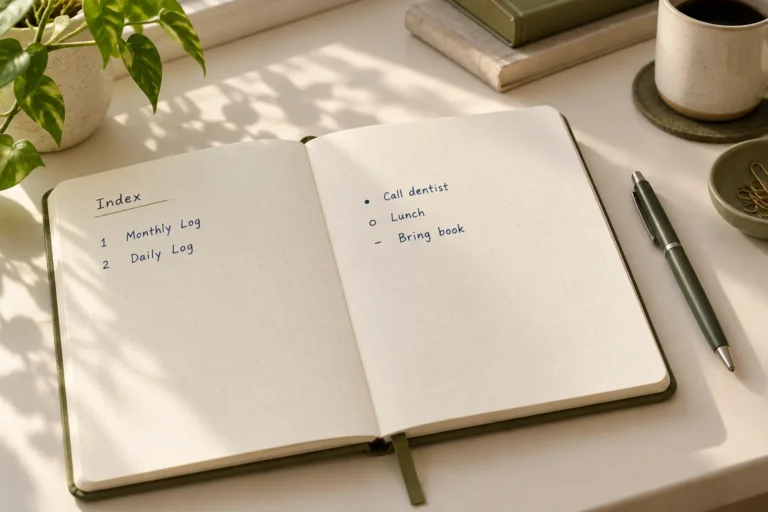
Use a simple list or two-column layout to collect dates, appointments, deadlines and plans that do not belong to one particular week. Leave a little room beside each date for a short note. A monthly log is useful when you want to see the shape of July without writing every detail into a calendar box. Keep recurring reminders in one consistent place.
3. July Calendar at a Glance
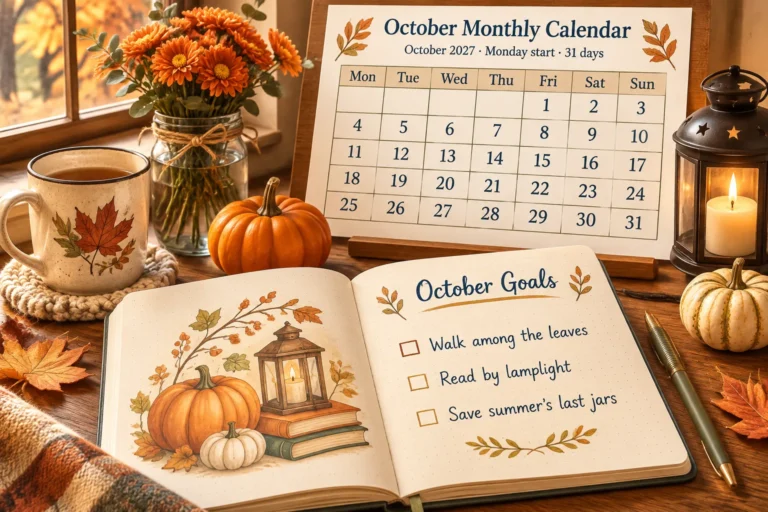
Draw a Monday-start grid with seven columns and enough rows for all 31 days. For July 2027, leave Monday through Wednesday blank in the first row, then place 1 under Thursday, 2 under Friday, 3 under Saturday and 4 under Sunday. The final row runs from July 26 under Monday through July 31 under Saturday, with Sunday left blank. Mark only the dates that matter to you.
4. July Weekly Spread
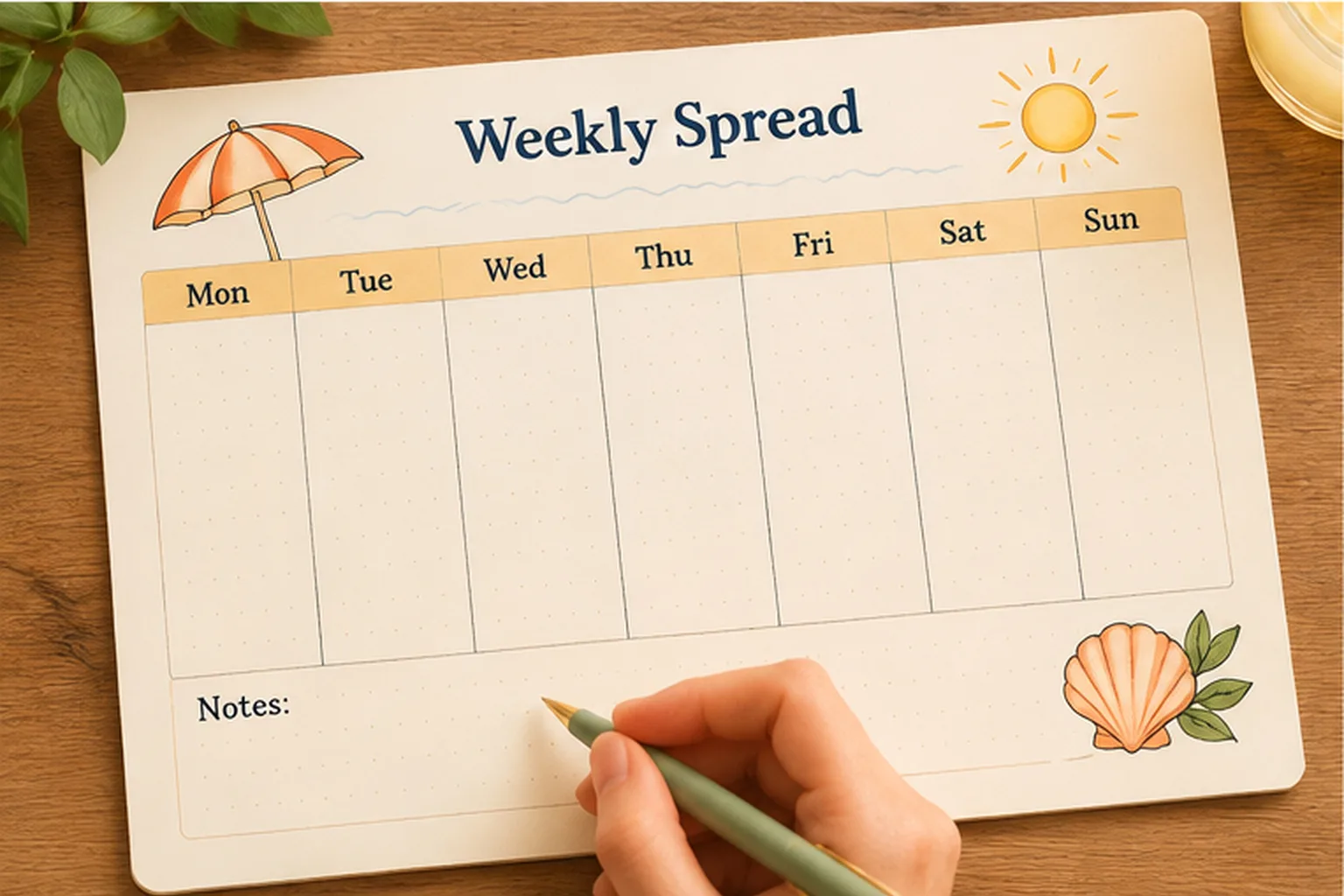
Divide one page into seven day spaces, or use a two-page layout if you prefer larger writing areas. Add a small notes box for reminders that do not have a specific day. This pack’s weekly sheet is intentionally undated, so you can use it for any week in July — or reuse the layout in another month. Write the dates in by hand when you are ready.
5. July Brain Dump
Make one open page for everything you do not want to keep in your head: errands, ideas, questions, things to remember and small tasks. Do not sort the list while you are writing. Once the page is full, circle what matters this week, move dated items to your monthly or weekly log, and let the rest wait. The purpose is to clear some mental space, not to create another perfect list.
Track Your July
6. July Habit Tracker
Create 31 small spaces across the page and write one habit beside each row. Choose a short list of routines you genuinely want to notice, such as reading, stretching, taking a walk or preparing for the next day. Mark a space when you complete the habit, but do not treat an empty square as a failure. A tracker is a record of what happened, not a scorecard for your worth.
7. July Mood Tracker
Choose a small set of mood words that feel clear to you, then assign each one a color or symbol. You could use a row of circles, little suns, flowers or simple numbered boxes — one for each day of July. Add a tiny key at the bottom so you remember what each mark means. Keep the categories broad and personal; you do not need to explain every feeling.
8. July Sleep Tracker
Use one row for each day and record a simple detail such as bedtime, wake-up time or a short note about how rested you felt. Choose only the information you find useful, and keep the format easy to fill in the next morning. This is a gentle noticing tool, not a health record or medical advice. If sleep is a concern, a journal cannot replace guidance from a qualified health professional.
9. July Gratitude Log
Give each day one short line for something you appreciated. It can be ordinary: a cool drink, a helpful message, a quiet moment or a little time outdoors. If writing every day feels like too much, use the page whenever you remember. The point is to make room for noticing, not to force a positive answer on a difficult day.
10. July Reading Log
Draw a row for each book you read or want to start. Include the title, author, start and finish dates, and a small space for a favorite line or quick reaction. If you are reading more than one book, add a status mark such as “reading,” “paused” or “finished.” Keep the page about your reading life rather than turning it into a complicated rating system.
Summer Into July
11. July Doodle Page
Set aside a page for small summer drawings you can add whenever you have a spare minute. Try a collection of simple icons: a lemon, sunglasses, a flower, a picnic basket, a book, a beach ball or a little sun. Repeat one shape in different sizes to make the page feel connected. You can also use this as a low-pressure place to practice lines and lettering.
12. Picnic Planner Page
Make a practical checklist for a picnic or outdoor meal. Divide it into food, drinks, useful items and people to check with. Add a small space for the location and time, plus a reminder for anything that needs to stay cool. Keep the list flexible: a picnic can be a full afternoon plan or a simple snack outside.
13. July Bucket List
Write a short list of things you would enjoy doing before the month ends. Mix small ideas with one or two bigger plans: read outside, visit a local market, try a new recipe, watch the sunset or take a day trip. Leave a checkbox beside each idea, but do not make the list so long that it becomes another obligation. Unfinished items can move to August if they still matter.
14. Fourth of July Page
For a US Independence Day page, use a small red, white and blue palette with stars, stripes, fireworks or a simple flag-inspired border. Add the date, a space for plans and a few lines for what you want to remember. July 4, 2027 is a Sunday, so you can place it in the Sunday box of your monthly calendar. Keep the page welcoming for your own plans, whether they are a gathering, a quiet day or no celebration at all.
15. Summer Memories Page
Create a page for small moments you want to keep: a photo, a ticket, a pressed flower, a receipt from a favorite outing or a few lines about a day that felt good. Arrange pieces like a simple scrapbook, leaving room for a caption or date. You do not need a big event to fill this page. Ordinary details can be worth remembering, too.
Plan and Reflect
16. Mid-Summer Goals Check-In
Pause halfway through July and look at the intentions you wrote at the start of the month. Make three small sections: “still matters,” “needs adjusting” and “let go.” Write one realistic next step beside anything you want to continue. This is a check-in, not a demand to catch up. Goals can change when your time, energy or priorities change.
17. July Meal Planner
Use a weekly grid or a simple list to sketch out meals you already know you will need. Add a short grocery note beside the plan, and leave a few flexible spaces for leftovers, eating out or changing your mind. You do not need to plan every meal in advance. A rough guide can make busy days feel a little easier without taking away spontaneity.
18. Summer Trip Planner
Collect the details for a day trip or longer break on one page: destination, dates, travel notes, what to pack and anything to check before leaving. Add a small budget area if that helps you plan. Keep the page focused on details you are likely to forget, rather than copying every booking confirmation into your journal. Leave space for a note or memory after the trip.
19. July Money Tracker
Choose one simple view of your spending: daily totals, a few categories or planned expenses beside actual expenses. Add only the categories that help you understand where your money is going. This page is for personal organization, not financial advice. If detailed tracking feels stressful, use a short weekly check-in instead of recording every purchase.
20. End-of-July Reflection
Close the month with three prompts: What do I want to remember? What did I learn about what I need? What would I like to carry into August? Add a few lines for highlights and one small thing you are proud of. You do not need a dramatic lesson or a long entry. A few honest sentences are enough to give July a gentle ending.
How to Use the Free July Bullet Journal Setup Pack
The July Bullet Journal Setup Pack includes six printable sheets, each provided in A4 and US Letter:
- July Cover Page — a decorative month cover with a small July 2027 mini-calendar.
- July Monthly Calendar — a full Monday-start calendar grid for all 31 days.
- July Weekly Spread — one undated Monday–Sunday week with a notes box.
- July Habit Tracker — a 31-day tracker for routines you want to notice.
- July Mood Tracker — a 31-day page for a simple personal mood key.
- End-of-July Reflection — spaces for highlights, lessons and what you want to carry into August.
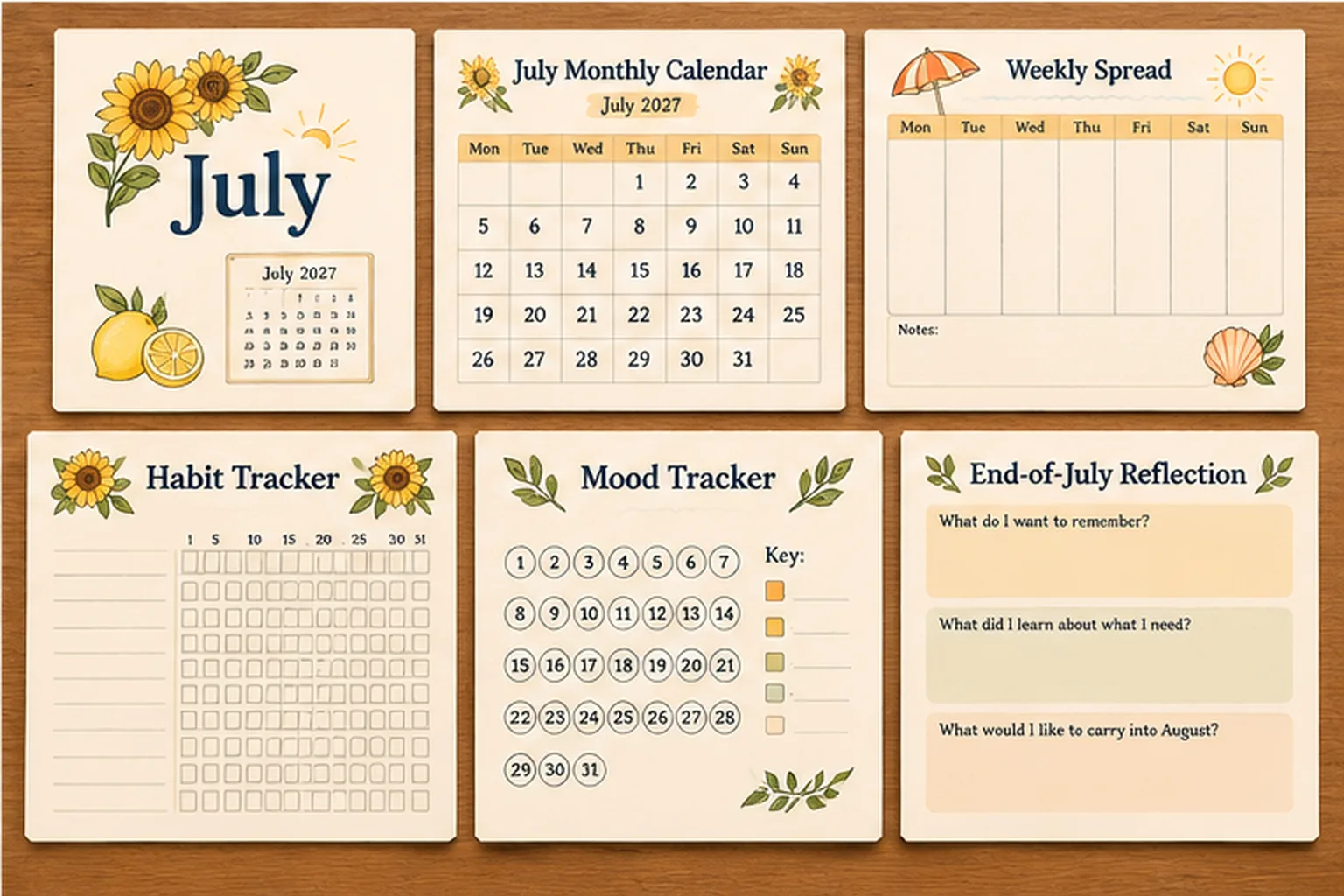
Choose the pages you want to use; you do not have to print the full set. The monthly calendar and trackers are dated for July 2027, while the weekly spread is undated and can be filled in for any week. The reflection page is designed for the end of the month.
Find the pack in The Small Pages Library. It is free, with no signup required. Open the library, choose the A4 or US Letter version of each sheet, and print only what you need.
How to Print and Use the July Pages
For the cleanest result, select the paper size that matches your file and print at Actual Size or 100%. Avoid “Fit to printable area” if it changes the proportions of the page. Use ordinary printer paper for everyday planning, or slightly heavier paper if you want to add color, stickers or small keepsakes.
If you use a bound journal, you can print a sheet and keep it beside your notebook, trim it to fit, or copy the layout by hand. If your notebook is smaller than the printed page, use the PDF as a reference rather than shrinking the text until it becomes difficult to read. A pencil draft can help you decide how much space each section needs.
The weekly spread is undated, so write the dates across the top when you begin a new week. The monthly calendar is Monday-start and follows the verified July 2027 layout. If you prefer Sunday-start calendars, you can draw a different grid in your notebook; the supplied calendar sheet remains Monday-start.
July Bullet Journal Ideas: Frequently Asked Questions
1. When should I set up my July bullet journal?
Set it up near the end of June or at the beginning of July, whichever feels easier. You can prepare the monthly calendar early and add weekly pages as each week begins. There is no need to finish every spread before the month starts.
2. What spreads does a July bullet journal need?
A useful starting set is a cover page, monthly calendar, monthly log and one weekly spread. Add a tracker or reflection page only if it supports something you want to plan or notice. Your journal can be useful with just two or three pages.
3. What are good July bullet journal themes?
Summer flowers, sunflowers, citrus, beach days, picnics, seashells, simple fireworks and garden colors all work well for July. Choose one or two motifs and repeat them across the pages so the setup feels connected without requiring elaborate drawings.
4. Is the July Bullet Journal Setup Pack free?
Yes. The six-sheet July Bullet Journal Setup Pack is free in The Small Pages Library, and no email signup is required. You can choose individual sheets rather than downloading or printing the entire set.
5. What size are the printables?
Every sheet is available as a single-page PDF in A4 and US Letter. Choose the version that matches your paper. The calendar is Monday-start, and the weekly spread is undated.
6. I can’t draw — can I still use these ideas?
Absolutely. Use the printable sheets, simple boxes, lines, labels, stickers or washi tape. You can also copy a layout with a ruler and a pen. Decorative details are optional; the page only needs to work for you.
A Small Start for July
A July bullet journal does not need 20 finished spreads to be useful. Pick one page that would make the month easier, then add another if you find you need it. Keep the layouts practical, leave room for real life and let the pages change as the month unfolds.
Small pages. Meaningful days.
Journaling Ideas Editorial Team
Looking ahead to next month? Explore our august bullet journal ideas for 20 simple spreads, from monthly calendars and trackers to garden harvest and back-to-school preparation. You’ll also find a free six-sheet August Bullet Journal Setup Pack in A4 and US Letter, with no signup required. Choose your favorite pages and start planning August one small step at a time.


2 Comments